Nora Chavooshian is an American sculptor and former film production designer, born on 25 October 1953 in Philadelphia, Pennsylvania. Now 72, she is based in New Jersey, where she teaches at Montclair State University and has built a sculpture practice over three decades, rooted in Armenian genocide memory, Guatemalan human rights history and, more recently, the science of living fungi.
Her name often surfaces alongside Joe Morton, the Emmy-winning actor she was married to for 21 years. That connection is real. It is also, by some margin, the part of her story that tells you least about her.
Table of Contents
Early Life and Background
Chavooshian trained at two art schools: the Pennsylvania Academy of the Fine Arts, followed by the San Francisco Art Institute, where she completed a BFA in 1974. After graduating, she moved to Los Angeles.
In Los Angeles, she worked first as a stage designer, building sculptural sets for theatre. Her sculpting background shaped the work directly, and the skills carried over into film production design: designing and building physical environments, working with materials at a production scale.
A California Arts Council Grant in 1978 funded her to curate a show of San Francisco women’s artwork at the Los Angeles Women’s Building, four years out of art school.
Four Films With John Sayles
Her film career ran from 1982 to 1988 and was built around a four-film collaboration with director John Sayles, one of the most important figures in American independent cinema at the time.
Her credits with Sayles:
- Baby It’s You (1983) as assistant art director
- The Brother from Another Planet (1984) as production designer
- Matewan (1987) as production designer
- Eight Men Out (1988) as production designer
Eight Men Out, the 1919 Black Sox scandal film with a cast including John Cusack and Charlie Sheen, required Chavooshian to design period baseball stadiums and turn-of-the-century city streets from scratch. It remains the most technically demanding credit of her film career.
She also contributed sculptural set pieces to Martin Scorsese’s After Hours (1985) and worked on music videos for Bruce Springsteen and Madonna.
In 1988, she stopped. She left Los Angeles for the East Coast and returned to sculpture full time. The film industry made no public note of it. According to her own account at norachavooshian.com, she went back to what she had always been before the film work: a sculptor.
Joe Morton, the Marriage and the Children
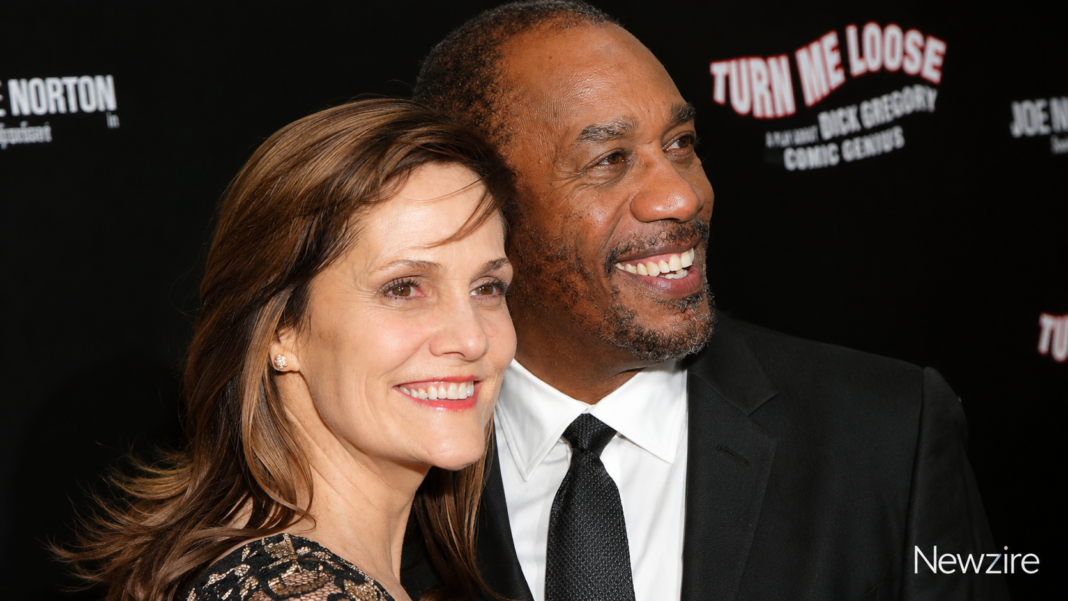
Chavooshian met Joe Morton on the set of The Brother from Another Planet in 1984. They married on 6 October 1985 and divorced in 2006 after 21 years together.
Morton, who won a Primetime Emmy Award in 2014 for his role as Eli Pope in Scandal, has appeared in more than 70 films, including Terminator 2: Judgment Day. Chavooshian is widely known as Morton’s ex-wife.
They have three children together: daughters Hopi and Seta, and son Ara. Chavooshian has since become a grandmother.
The reason for the divorce has never been made public. In a letter she published on her own website in June 2020, she described herself as an artist, production designer, adjunct professor, mother and grandmother. That is the extent of what she has said publicly about her personal life.
The Sculpture Work and What Drives It
After settling on the East Coast in the early 1990s, Chavooshian built a body of work centred on her Armenian-American heritage and a long-standing interest in who gets remembered and who gets erased.
She is the granddaughter of four survivors of the 1915 Armenian Genocide. All four grandparents left the Ottoman Empire and reached the United States between 1915 and 1920. She has written about her maternal grandmother, Anna, calling her survival:
“A personal beacon of hope, testament to resilience and affirmation of will.”
Anna’s story sits at the centre of what Chavooshian has made since, and explains the direction her sculpture took.
Her work “Speak” grew from her interest in the genocide trials in Guatemala, the first time in history a national court prosecuted a former head of state for genocide against his own people. That case led her to Trama Textiles, a 100 per cent women-owned weaving cooperative formed by Mayan women rebuilding their communities after the Guatemalan Army’s campaign between 1978 and 1986, which killed or disappeared more than 200,000 people and destroyed 626 villages.
Textile remnants from 28 weavers across 17 villages were sent to her studio. She pressed each piece into a cracked clay surface and hung the finished work from a three-foot human mandible, a direct reference to the forensic anthropologists who spent years recovering remains from unmarked mass graves to build the prosecution case.
The follow-up piece, “Trama”, brought all 28 weavers together as named co-creators in a single collaborative tapestry, each square carrying the symbols, colours and heritage of a particular Mayan community. All proceeds went to the Trama Education Fund.
Her 2020 solo at Denise Bibro Fine Art in Chelsea, New York, Women’s Work: Sculpture and Trama Textiles, Mayan Women Weavers Collaboration, brought both works to a public audience and was her fourth major show with that gallery.
Her sculpture has been reviewed by the New York Times and The Philadelphia Inquirer, and a permanent bronze commission was installed at the University of Minnesota Arboretum in 2017.
Growing Fungi, Making Art
Around 2013, Chavooshian encountered work made from mycelium, the root structure of fungi, through the work of artist Philip Ross during a visit to San Francisco. Back in New Jersey, she began following biomaterial company Ecovative and started experimenting with their grow-your-own kits around 2015.
She worked out her own casting methods: grinding inoculated hemp into fine powder and pouring it into silicone molds taken from older sculptures, or growing two halves separately and binding them in cling film overnight until the living material joined together.
She told Grow.bio in 2024 that she had found herself with “a relationship and affection for the material,” treating the fungus as a collaborator rather than raw material.
In 2022, she produced mycelium urns for dancer iele paloumpis’ performance In Place of Catastrophe, A Clear Night Sky at Danspace Project in New York. Some urns were hollow to hold dried eucalyptus; others were cast solid around binaural microphones.
Her 2024 solo at Lagstein Gallery in Nyack, New York, featured Rush, cast in algae urethane and depicting mycelial fungi cascading through a river channel. Her statement for the piece addressed mycelium’s capacity to filter heavy metals and pathogens from contaminated water.
Recent Work and Exhibitions
In February 2025, Chavooshian was included in Our Fragile Moment at Hudson Guild Gallery in New York, a group exhibition of 31 artists curated by Fran Beallor as part of the gallery’s Art in Response programme. The show addressed vanishing wilderness, rising pollution, endangered species and the wider climate crisis. It opened on 13 February and was extended to late April 2025.
She continues to teach production design in the Film Department at Montclair State University in New Jersey. Her work is held in public and private collections across the United States and Europe.
From the San Francisco Art Institute in the 1970s to mycelium cast in a New Jersey studio in 2024, her practice has moved across materials and methods without losing the same underlying concern: what survives beneath the surface, and what it takes to bring it into view. Her full exhibition history and biography are at norachavooshian.com.
Key Facts About Her
| Detail | Information |
|---|---|
| Full name | Nora Chavooshian |
| Date of birth | 25 October 1953 |
| Age | 72 (as of 2026) |
| Birthplace | Philadelphia, Pennsylvania, USA |
| Nationality | American (Armenian descent) |
| Education | Pennsylvania Academy of the Fine Arts; San Francisco Art Institute (BFA, 1974) |
| Profession | Sculptor, former production designer, adjunct professor |
| Former spouse | Joe Morton (m. 1985, div. 2006) |
| Children | Hopi, Seta and Ara |
| Key film credits | Eight Men Out (1988), Matewan (1987), The Brother from Another Planet (1984) |
| Current base | New Jersey, USA |
| Official website | norachavooshian.com |
Sources: norachavooshian.com · IMDb · Grow.bio · Denise Bibro Fine Art