Choosing a barbecue starts with understanding where it will be used and what you want to cook. A compact model may suit a balcony or courtyard, while a larger gas barbecue can provide the capacity needed for regular entertaining.
When comparing options for a Weber BBQ in Sydney, consider the usable floor area, household size, preferred fuel and meals you prepare most often. These factors will help narrow the range before you compare colours, accessories or additional features.
Measure the Complete Barbecue Area
Measure more than the barbecue’s width. Allow space for the lid to open, access to controls and grease trays, and comfortable movement around the appliance. Side tables, carts and preparation surfaces also contribute to the footprint.
The barbecue should stand on a firm, level surface in a well-ventilated outdoor area, with suitable clearance from fences, vegetation and other combustible materials according to the product instructions.
For a balcony or strata property, check the building’s rules before choosing a fuel type. Some buildings restrict LPG cylinders, charcoal or solid-fuel cooking even when there is enough physical space.
When planning an outdoor kitchen, select the built-in model before finalising cabinetry. Ventilation, cut-out dimensions, clearances, connections and service access must suit the specific appliance.
Match the Range to Your Available Space
Weber offers several sizes, from portable models to full outdoor cooking systems.
The Baby Q is designed for portability and limited outdoor areas. It can suit small courtyards, camping and caravanning when used in an appropriate outdoor location.
The Weber Q and Q+ provide more cooking capacity while remaining relatively compact. They suit households wanting a barbecue for regular home cooking without a large permanent footprint.
The Family Q+ has a larger cooking area and fixed cart, making it more suited to family meals and backyard entertaining.
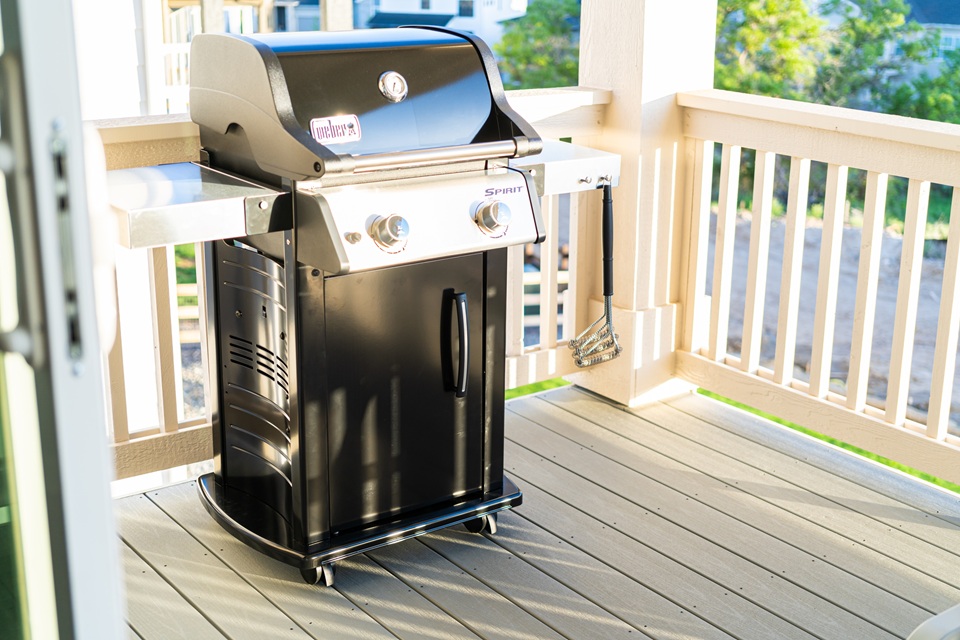
Spirit and Genesis gas barbecues provide multi-burner layouts, preparation space and larger cooking surfaces for households that entertain regularly. Built-in Q and Genesis models can be incorporated into a planned outdoor kitchen.
The best size is not necessarily the largest that fits. The barbecue should leave room for food preparation, serving and movement through the outdoor area.
Choose Capacity Around Everyday Cooking
Consider the number of people you cook for most often, not only the largest gathering you host each year.
A smaller barbecue may comfortably handle regular meals for a couple or small household. For occasional parties, food can be cooked in stages or with a combination of direct and indirect heat.
A larger model becomes more useful when you frequently prepare several foods at once. Multiple burners allow separate temperature zones, such as a hotter area for searing and a gentler section for vegetables or roasting.
Also consider meal size. Whole chickens, large roasts and multiple trays need more hood clearance and cooking area than steaks, sausages or vegetables.
Select the Fuel and Cooking Surface
Fuel type affects lighting time, temperature control, flavour and maintenance.
Gas models, including the Q, Spirit and Genesis ranges, ignite quickly and allow immediate heat adjustment. They suit weeknight meals and cooks who value straightforward temperature control.
Charcoal kettles and Summit Kamado models require time to light and are controlled through fuel arrangement and airflow. They suit people who enjoy managing a live fire, adding smoke and experimenting with grilling, roasting and low-and-slow cooking.
Electric models such as the Lumin and Pulse can suit compact outdoor areas with an appropriate power supply. Property rules and the manufacturer’s placement instructions still need to be checked.
SmokeFire pellet grills use wood pellets with electronic temperature control. They suit cooks who want wood-fired grilling, roasting and smoking without managing a traditional charcoal fire.
Weber Slate gas griddles use a flat cooking surface rather than an open grill. This format suits smashed burgers, breakfast dishes, stir-fries and chopped vegetables.
Compare Features You Will Actually Use
Features should support the way you cook rather than simply increase the product specification.
A high hood provides room for larger roasts. Multiple burners make heat zones easier to create. Preparation tables can be valuable when the barbecue is positioned away from the kitchen, while temperature monitoring may assist with longer cooks.
Examine how grease is collected and how easily cooking surfaces and trays can be removed. These details affect routine maintenance.
Accessories should be matched to the exact model. Hotplates, rotisseries, pizza stones, covers and thermometers are not necessarily interchangeable between the Baby Q, Q, Family Q, Spirit, Genesis and other ranges.
Begin with accessories that support your regular menu. A fitted cover, suitable cooking plate and food thermometer may provide more value than several specialised accessories.
Plan for Safe Use and Maintenance
Fire and Rescue NSW recommends placing barbecues on a firm, level base in a well-ventilated area, clearing combustible materials and keeping a responsible adult in control while the barbecue is operating.
For LPG models, check the cylinder date, hoses and connections. Do not use cracked or perished hoses, and never test for a leak with a naked flame. Remove grease and food residue regularly to reduce fire risk.
Allow charcoal and ash to cool completely before removal and follow the manufacturer’s shutdown and disposal instructions.
NSW fire restrictions also affect barbecue use. Solid-fuel barbecues cannot be used outdoors during a Total Fire Ban. Gas and electric models may be used only when NSW Rural Fire Service conditions are met, including adult supervision, clearance from combustible materials and a continuous water supply.
Choose a Weber BBQ That Fits Your Routine
The right barbecue should suit your outdoor space on an ordinary day, not only during special events.
Start with accurate measurements and any strata or property restrictions. Then compare cooking capacity, fuel type and the foods you prepare regularly. Finally, consider the features, cleaning access and compatible accessories that will make the barbecue easier to use.
A Baby Q, Q, Family Q, multi-burner gas model, charcoal cooker, electric barbecue, pellet grill or flat-top griddle can each be the right choice in a suitable setting. Matching the model to your space and cooking habits will provide a barbecue that is practical to operate and more likely to be used throughout the year.