Uneven home temperatures are common in houses where one area stays too warm while another feels too cold. A 2 zone mini split helps solve this problem by giving two rooms or areas their own temperature control. Instead of forcing the whole home to follow one thermostat, each zone can run based on its actual comfort needs.
Why Uneven Home Temperatures Happen
Uneven temperatures usually happen because different rooms gain and lose heat in different ways. A sunny upstairs bedroom may become hot in the afternoon, while a shaded downstairs room stays cooler. Rooms above garages, converted attics, basements, and additions often have different insulation levels, which makes them harder to balance with one central system.
Central HVAC systems can also struggle when ductwork is too long, poorly sealed, or not designed for newer room layouts. Air may reach one room strongly but arrive weakly in another. Closing vents or changing the main thermostat may help slightly, but it often creates new comfort problems in other parts of the house.
How a 2 Zone Mini Split Controls Two Problem Areas Separately
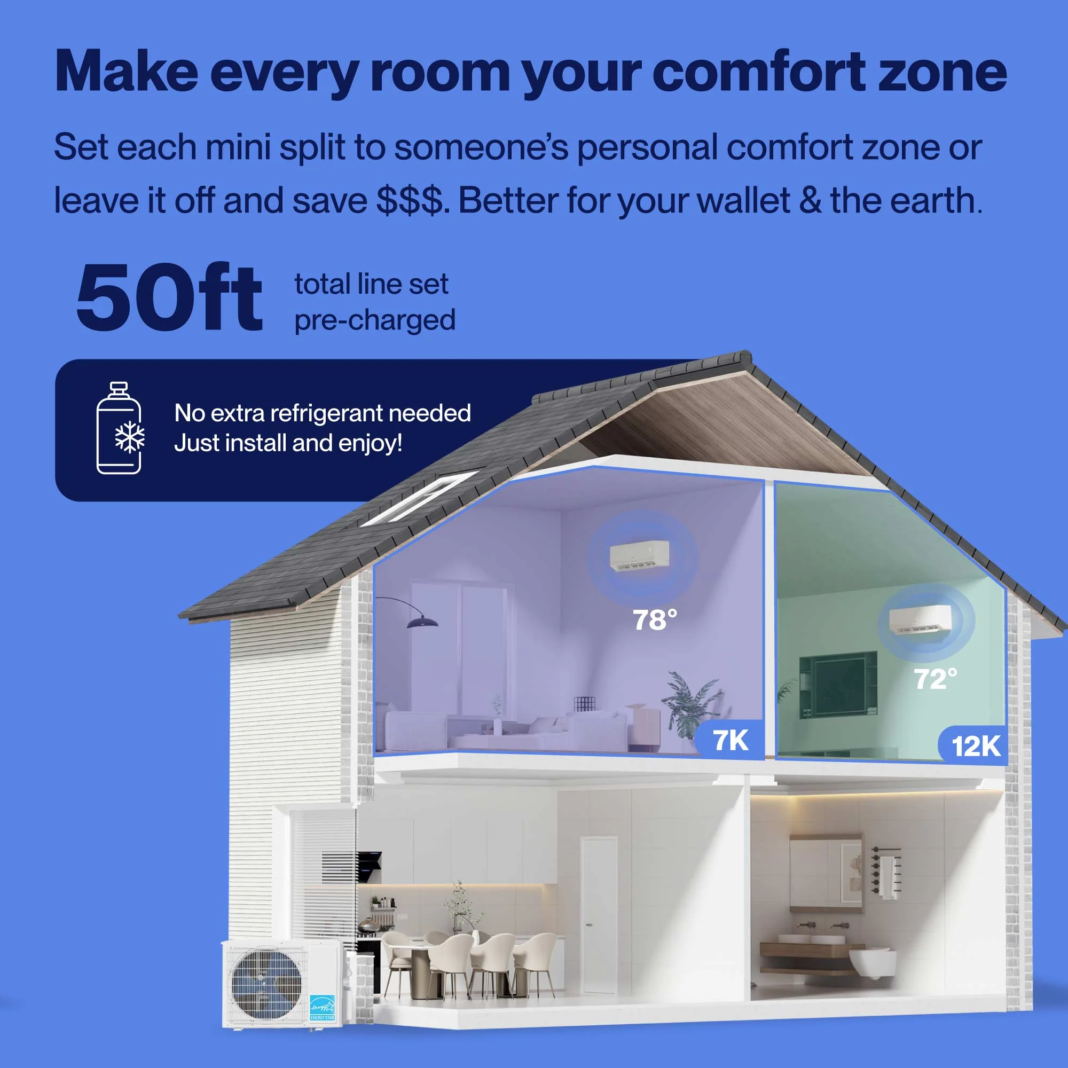
A 2 zone mini split AC connects two indoor units to one outdoor condenser, allowing two separate spaces to be heated or cooled independently. Each indoor unit has its own control, so one room can be set cooler while the other stays warmer.
This is useful when two areas have very different comfort needs. For example, an upstairs bedroom may need extra cooling at night, while a home office may need steady comfort during the day. With a 2 zone setup, both spaces can be managed separately without overcooling or overheating the rest of the home.
This separate control is what makes the system more flexible than a single thermostat. The mini split does not try to force the entire house into one temperature. It focuses on the rooms that actually need help.
Best Rooms to Pair With a 2 Zone Mini Split
The best room pairings are usually the spaces that create the biggest comfort complaints. A common setup is an upstairs bedroom and a downstairs living room, especially in homes where heat rises and the second floor becomes harder to cool.
Another strong pairing is a home office and a primary bedroom. These rooms are often used at different times of day, so separate control can improve comfort without wasting energy. Finished basements, garages, sunrooms, and bonus rooms are also good candidates because they are often outside the strongest reach of central HVAC.
A 2 zone mini split can also work well for small additions or renovated spaces. If a new room was added after the original HVAC system was installed, the central system may not serve it properly. Adding a mini split zone can be easier than extending or redesigning ductwork.
How Zoning Improves Comfort and Energy Use
Zoning improves comfort because each room can respond to its own temperature conditions. Instead of making the whole home colder just to cool one hot room, a 2 zone mini split sends heating or cooling directly where it is needed.
This can also reduce energy waste. Many homes do not use every room at the same time. If the bedroom needs cooling at night and the office only needs cooling during work hours, each zone can run on a schedule that matches actual use. This targeted operation can be more efficient than conditioning unused rooms through a whole-home system.
Inverter-driven mini splits can also adjust output gradually instead of turning fully on and off repeatedly. This helps maintain steadier temperatures and can make rooms feel more comfortable over long periods.
When a 2 Zone Mini Split Is Better Than Adjusting Central HVAC
A 2 zone mini split is often a better option when the temperature problem is limited to one or two areas. If most of the home feels comfortable but two rooms remain difficult, replacing the entire central HVAC system may not be necessary.
It can also be a practical choice when ductwork is the main problem. Repairing, extending, or redesigning ducts can be expensive and disruptive, especially in finished homes. A ductless 2 zone mini split avoids major ductwork changes and gives problem rooms direct comfort control.
However, if the whole house has poor airflow, aging equipment, or major insulation issues, a mini split may not solve every problem alone. In those cases, homeowners may need to improve insulation, seal air leaks, or evaluate the central system as well.
How to Choose the Right 2 Zone Mini Split Setup
The right 2 zone mini split setup depends on room size, insulation, ceiling height, sun exposure, and how each space is used. BTU sizing is important because an undersized unit may struggle to keep up, while an oversized unit may cycle poorly and reduce comfort.
Homeowners should also consider indoor unit placement. Each air handler should be positioned where airflow can move through the room without being blocked by furniture, doors, or tall shelving. For bedrooms, placement should avoid direct airflow over the bed. For offices or living rooms, the unit should support even comfort across the main activity area.
A 2 zone mini split is a strong solution when two rooms have clear temperature problems and need independent control. With proper sizing and placement, it can make the home feel more balanced, reduce unnecessary energy use, and solve comfort issues that a single thermostat often cannot fix.