The best tech gadgets for elderly living alone have moved well beyond basic emergency alert buttons, as today’s devices combine real-time GPS location tracking, automatic medication reminders, voice-controlled connectivity, and passive fall detection in forms seniors are actually willing to use.
Together, five distinct categories of gadgets for elderly parents address the most common gaps in solo living safety across a range of price points. Here are the five tools that have earned their place in that ecosystem.
1. GPS-Enabled Safety Watches
Imagine a relative heading out for their morning walk and simply not returning by noon. A basic personal alarm reveals a problem exists, but it cannot pinpoint the exact geographical location. A GPS-enabled watch solves a fundamentally different problem by letting a family member open an application and view the exact coordinates of their loved one anywhere outside the home.
Location tracking preserves physical independence while giving family members a fast way to respond if a routine walk takes an unexpected turn. Several modern wearables now attach this critical monitoring capability to standard emergency alerting functions in a single device.
Among them, Tranquil’s GPS-enabled watch for seniors pairs real-time tracking with an SOS function that dials up to eight family contacts in sequence. The internal battery lasts up to a full week between charges, meaning families stop obsessing over daily power levels.
The device ships in four distinct styles with a slim Scandinavian design that looks like a standard timepiece rather than a bulky medical tool. This discreet styling ensures consistent wear, which makes any best GPS tracker for elderly UK users practical on a daily basis.
Shoppers should prioritize substantial battery capacities because constant charging remains a persistent limitation for older demographics. Search for reliable location access alongside a companion application that non-technical relatives can learn quickly.
| Key Insight: A basic personal alarm can tell you something is wrong, but only a GPS-enabled watch shows you exactly where your loved one is, preserving their freedom while giving you real-time location access. |
2. Smart Medication Dispensers
Missed medication schedules create immense physical vulnerability for seniors managing multiple daily prescriptions. Research consistently proves that non-adherence among older adults creates a massive driver for preventable hospital admissions across the country.
Among community-dwelling older adults exposed to chronic polypharmacy, almost 40% stay poorly adherent to at least one drug class. The error rate climbs past 50 percent for patients exposed to four or more different medications.
Automatic pill dispensers address this adherence gap instantly at the source. The motorized containers release the correct pill dosage at a pre-set hour and emit an audible chime when the medicine requires taking.
Modern digital models send text notifications directly to a caregiver if a scheduled tray goes untouched, closing the communication loop without demanding an invasive daily phone call. Sturdy lockable compartments prevent accidental double-dosing while simplified loading mechanisms spare families from complex weekly programming tasks.
3. Voice-Activated Home Assistants
Touchscreens often present frustrating physical barriers for older adults dealing with limited finger dexterity or vision degradation. A voice assistant bypasses this input hurdle to keep residents connected to their daily routines using simple speech.
These compact desk speakers respond to spoken commands to announce medication schedules, initiate loud hands-free phone calls, and play local radio stations. Caregivers can also link the assistants to compatible smart home hardware, allowing users to adjust overhead lights or heating thermostats without navigating tiny remote buttons.
A smart speaker also provides a reliable audio presence in calm rooms, meaningfully reducing the stark isolation that frequently accompanies solo living setups. Specific devices allow remote relatives to request wellness check-ins or receive automatic alerts if ambient noise systems detect an unusual drop in daily activity.
Buyers must prioritize clear acoustic setup tools and loudspeaker volumes to accommodate users managing mild hearing loss. Testing reliable vocal recognition software on softer or regionally accented voices evaluates the unit better than any written specification sheet.
| Pro Tip: A voice assistant provides more than hands-free help; it offers a gentle, always-available presence that can meaningfully reduce social isolation in a quiet house. |
4. Smart Video Doorbells
An unexpected afternoon knock feels deeply unsettling for anyone living isolated in a large property. A smart doorbell immediately removes that stressful uncertainty before the deadbolt ever turns.
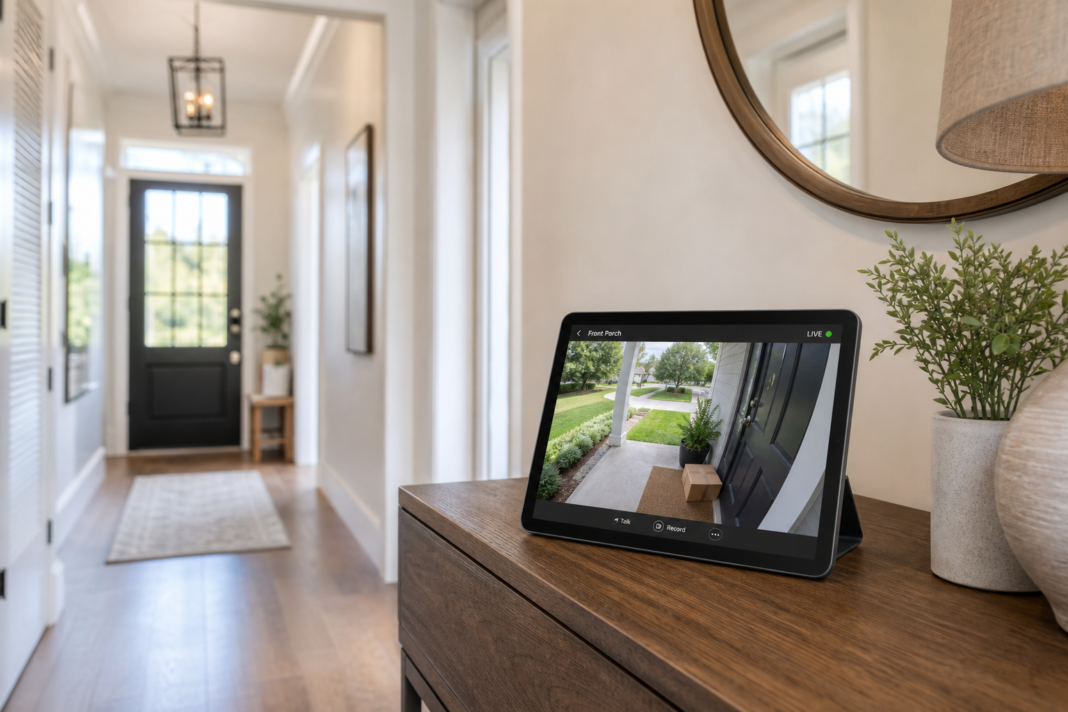
Video-enabled exterior cameras let residents see and speak directly with outside visitors through a bright smartphone or tablet screen. Motion-activated digital alerts notify both the sleeping resident and distant family members the moment a delivery driver crosses the front pathway.
The remote camera access adds a highly practical layer of physical reassurance for distant working relatives. An adult child can easily speak through the exterior doorbell on their parent’s behalf from a different city altogether.
The remote answer option becomes exceptionally useful when an elderly resident expects a crucial package delivery but struggles to hear the chime from their back garden. Search specifically for doorbells offering clear two-way audio streams, localized digital storage for recorded footage, and crisp night vision lenses.
5. Fall Detection Sensors
Falls represent a primary cause of serious physical injury for aging populations across the public health system. Current health tracking indicates that 30% of people over 65 and half aged over 80 fall at least once a year.
A massive proportion of those dangerous incidents occur unwitnessed inside private residential spaces. Passive in-home monitoring sensors scan these high-risk areas constantly to ensure no nighttime slip goes unnoticed by medical dispatchers.
Relatives strategically place these digital sensors in domestic bathrooms, long hard-floor hallways, or tiled kitchens to track sudden heavy movements. If the calibrated system detects a severe floor impact, it automatically transmits an emergency alert to a family phone or a designated professional monitoring center.
Passive scanning devices require zero manual button-pushing action from the individual who has fallen. This automated reaction saves lives if the senior gets knocked unconscious or suffers too much shock to operate a wearable chest pendant.
Families evaluating this hardware as a personal alarm alternative for elderly households must verify base detection accuracy alongside established false-alarm rates.
High frequencies of inaccurate software alerts erode caregiver trust rapidly, ultimately causing busy monitoring teams to dismiss genuine emergency signals. Discreet ceiling designs blend neatly into standard domestic architecture without adding threatening medical aesthetics to a comfortable living space.
| Key Insight: With one in three over‑65s falling each year, passive sensors close the gap where a wearable SOS can’t, alerting family even when the person can’t press a button. |
The Bottom Line
A layered approach to technology for independent living for elderly people functions far better than relying on a single isolated gadget.
Selecting proper individual components ensures the broader safety net holds strong during a sudden residential emergency. Here is exactly what to demand from each device category:
- Medication dispensers: Require lockable plastic compartments and app-linked missed dose alerts to track daily consumption habits accurately.
- Voice assistants: Demand excellent voice microphone clarity alongside simple setups to guarantee the device actually sees heavy daily use.
- Video doorbells: Dependable infrared night vision and remote cloud answering access stand out as the two mandatory technical capabilities.
- Fall sensors: Hold manufacturers to a strict low false-alarm rate, as baseline hardware accuracy determines whether the resulting notification triggers a real response.
- GPS watches: Substantial battery capacities, real-time map location access, and a discreet physical design separate a useful tracker from a cheap toy.
No combination of electronics entirely neutralizes household safety hazards. A GPS-enabled safety watch establishes reliable location tracking the literal second a user steps outside their front gate.
The remaining digital sensors handle baseline operations inside the property, verifying whether critical medication was swallowed or an evening visitor was securely screened. Purchasing accurate versions of these five tools gives relatives practical ways to monitor daily routines while avoiding invasive household surveillance.