High school football’s homecoming week combines seven distinct American homecoming traditions, including the game, pep rallies, court crowning, parade floats, spirit week, tailgating, and the Texas mum exchange, into a single week-long ritual that no other event on the school calendar can replicate.
Packed hallways lined with hand-painted banners, the low roar of a Friday crowd forming outside stadium gates, and the smell of fresh paint on tissue-paper floats all signal the same thing: homecoming has arrived. Some of these high school football traditions you will recognize immediately. One, especially beloved in Texas, might surprise you.
1. The Homecoming Game
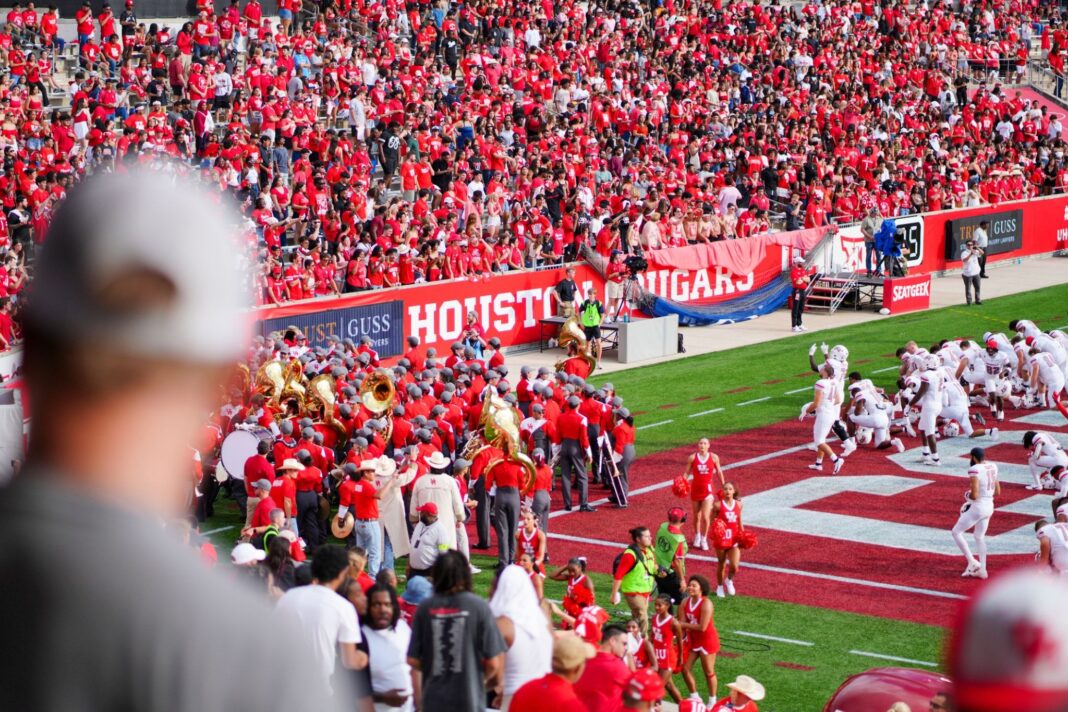
Every other tradition points toward Friday night under the lights, making this matchup the gravitational center of homecoming football culture. Schools typically schedule a rivalry or a competitive but winnable game because the goal is a celebratory atmosphere rather than an anxious one.
The practice traces back to early 20th-century college football when universities invited alumni back to campus, a format high schools adopted decades later.
The marching band runs through warmup scales in the end zone while the smell of popcorn drifts from the concession stand. The first wave of alumni files into the home side with old letter jackets still buttoned up against the chill, signaling that the community buildup is finally complete.
2. Pep Rallies
The homecoming pep rally fills a gymnasium in under ten minutes flat. Marching band members take formation on the floor, painted faces flood the student sections, and team introductions send noise bouncing off cinder block walls.
Students often arrive wearing early versions of their Texas mums, clattering with handcrafted homecoming trinkets, ribbon, and supplies from Michelle’s aDOORable Creations. These metallic charms and thick braided layers ring loudly over the gym noise, adding visual weight to the chaos.
Class spirit competitions, skit performances, and the ceremonial awarding of the spirit stick transform the rally into a participatory contest. The screech of a gymnasium air horn and the rhythmic stomp of bleachers signal to every student in the room that someone is about to wear a crown.
| Quote: For roughly 45 minutes, the social architecture of the school collapses; freshmen and seniors share the same bleachers, screaming the same chants, unified by color and volume. |
3. Court and Crowning
The homecoming court crowning ceremony runs on deliberate suspense. Class nominations happen days in advance, a schoolwide vote follows, and the results stay secret until the halftime field clears. A spotlight finds the winner on the fifty-yard line, where last year’s royalty officially places the crown on their head.
Many schools now offer gender-inclusive court categories, reflecting community shifts while preserving the core public celebration. The mechanics change slightly, but a crowd holding its breath and a name announced over stadium speakers remain constant pieces of the night. Long before that crown is placed, another kind of school pride rolls through the streets.
4. Parade Floats
Homecoming parade floats get built the night before in gymnasium parking lots by students running on adrenaline and borrowed time.
Volunteers wrap chicken-wire frames in tissue paper flowers, bolt painted plywood signs to repurposed flatbed trailers, and staple school-color streamers by the hundreds. The construction is labor-intensive by design because the group effort drives the entire experience.
Parents supply pickup trucks and extension cords while local businesses donate hardware materials.
The finished floats move slowly through town or along the campus route, creaking under their own weight while tissue paper catches in the breeze. The parade functions as a rolling announcement that homecoming week has reached full momentum.
| Key Insight: The overnight build of homecoming parade floats chicken-wire, tissue flowers, borrowed time is labor-intensive by design, because the shared effort is the point. |
5. Spirit Week Dress-Up Days
Homecoming spirit week runs five themed days that systematically build pressure toward Friday. The classic structure lines up Decade Day alongside Twin Day, School Colors Day, Career Day, and Throwback Thursday. Senior classes escalate the effort most dramatically by treating each theme as a heavy competition rather than a casual suggestion.
The cumulative visual effect transforms every hallway into a costume stage by midweek. A chaotic mix of mismatched twin outfits and ironic firefighter helmets signals that the school has temporarily agreed to abandon dress codes. Once the final bell rings on Friday, the celebration moves outside.
6. Tailgating
The pre-game homecoming tailgate operates on a simple democratic principle where no ticket or roster spot is required. Folding chairs in school colors appear in the stadium lot two hours before kickoff, team flags get staked into truck beds, and grills send smoke drifting across rows of vehicles. The parking lot belongs to everyone willing to show up with a cooler.
Grandparents settle into lawn chairs alongside parents running the grill while students move freely between family clusters. Teenagers watch their parents do exactly what previous generations did before the same game, passing the ritual down in real time.
7. The Texas Mum and Garter Tradition
A homecoming mum is an elaborate corsage initially from Texas that has now become a recognized custom across much of the South. What began in the mid-twentieth century as a simple live chrysanthemum flower gifted to a date evolved rapidly once crafters realized real flowers wilted before halftime.
Artificial fabric construction emerged as the practical solution, giving modern makers the durability they needed to scale up.
Modern mums are built from wired-edge satin ribbon, poly deco mesh, and glitter strands layered into a central bloom that can span from shoulder to knee. Dangling streamers in school colors trail down the front, often reaching the ankle on show-stopping versions.
Attached cowbells, mascot charms, block letters spelling a graduation year, and small LED lights turn each piece into a wearable biography.
Boys receive a garter version built with matching ribbon and worn on the upper arm to mirror their date’s display exactly. The mum exchange operates as a highly visible currency across the student body. A boyfriend crafts one for his girlfriend, friend groups swap smaller designs, and mothers spend days building elaborate versions for their daughters.
Families building these intricate pieces often turn to specialty craft suppliers or local fabric stores to source the heavy braided cords and specialized accents required for construction. The ribbon selection matters immensely, as the right material holds its layered shape through hours of wear while lighter options collapse by the third quarter. The size and complexity communicate effort in a visual language everyone at the game understands immediately.
The practice spread into Oklahoma, Louisiana, and parts of the broader South, but it remains most seriously executed in Texas. A homecoming mum operates as less of a decoration and more of a personal statement.
| Pro Tip: The right wired-edge ribbon holds its layered shape through hours of wear, while a lighter material collapses by the third quarter. |
The Real Impact
American homecoming traditions survive because they require heavy, hands-on participation from the community. Students and families actively construct the tissue-paper floats, organize the packed tailgates, and weave the elaborate ribbon and trinket mums that define the week’s visual identity.
These specific, repeatable actions pull alumni back to the same bleachers year after year, ensuring the halftime crowns and Friday night lights keep returning.