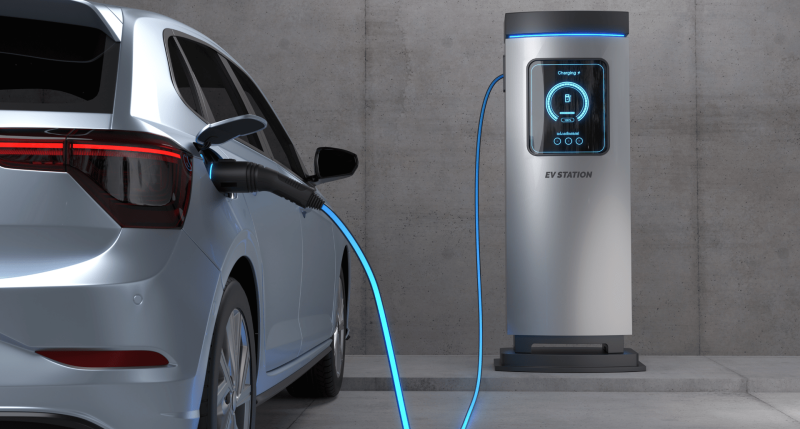
Owning an electric vehicle requires a different relationship with energy than owning a gas-powered car. The habits that make sense for a gas tank, like running it down to a low level before filling up, do not apply to a lithium-ion battery. Some of the most common EV charging mistakes are direct imports of gas car habits that quietly reduce battery lifespan, range, and charging efficiency over time.
None of these mistakes is irreversible in the early stages. But some of them compound over months and years in ways that affect the battery’s long-term health. Understanding them before they become habits is considerably easier than correcting them after the damage has accumulated.
Homeowners in northern Colorado installing EV charging equipment at their homes can work with Electric Vehicle Charging Thornton CO specialists at Positively Charged Electric. A licensed electrical contractor serving the Thornton area with Level 2 EV charger installation for residential properties.
The U.S. Department of Energy notes that how and when you charge an EV significantly affects battery longevity, and that thermal management during charging is one of the primary factors in long-term battery health
1. Always Charging to 100%
Charging a lithium-ion battery to 100% and keeping it there causes accelerated degradation at the top end of the charge range. Most EV manufacturers recommend keeping the daily charge limit at 80% for routine use and reserving full charges for long trips where the full range is needed.
The reason is electrochemical: lithium-ion cells experience greater stress when fully charged because the lithium ions are packed as densely as the electrode material allows. The cathode is under maximum strain at 100% state of charge. Staying in the 20% to 80% charge window significantly reduces the thermal and mechanical stress on the battery cells over time.
Most EVs allow the user to set a charge limit in the car’s settings or the manufacturer app. Setting the daily limit to 80% is a five-minute setup that most new EV owners do not do because nobody tells them until they have already been charging to 100% for six months.
2. Letting the Battery Run Below 10% Regularly
The low end of the charge range creates the same stress on battery cells as the high end, but in the opposite direction. Fully discharging lithium-ion cells causes copper dissolution at the anode, a degradation mechanism that is irreversible and that compounds with repeated deep discharge cycles.
Running the battery to 5% or below on a regular basis is not a habit borrowed from nickel-cadmium batteries of an earlier generation; those batteries benefited from full discharge cycles. Lithium-ion batteries do not. The recommended operating window for daily use is 20% to 80%, and consistently running below 15% shortens cell life in measurable ways over a three-to-five-year period.
Most EVs display a low battery warning at 10% to 15% and will activate reduced-power mode before the pack reaches zero. Treating that warning as a regular operating condition rather than an emergency margin shortens the battery’s useful life.
3. Using DC Fast Charging as the Primary Charging Method
DC fast charging (DCFC), also called Level 3 charging, delivers power at rates of 50 to 350 kilowatts and can charge many EVs from 20% to 80% in 20 to 45 minutes. The speed is a significant convenience, but fast charging generates substantially more heat in the battery pack than Level 2 charging. Heat is the primary environmental factor that degrades lithium-ion battery cell chemistry over time.
Most EV manufacturers recommend using DC fast charging for travel when long-range refueling speed is necessary, not as the routine daily charging method. Charging at home on a Level 2 charger overnight is the low-stress approach that preserves battery health for the long term. A vehicle that fast-charges 80% of the time will show measurably faster capacity degradation over 5 to 8 years than the same vehicle that fast-charges occasionally and uses Level 2 the rest of the time.
4. Not Installing a Level 2 Charger at Home
Level 1 charging, using a standard 120-volt household outlet, adds approximately 3 to 5 miles of range per hour. For most EV owners with daily commutes of 30 to 60 miles, overnight Level 1 charging often fails to fully recover the day’s usage. Owners who rely on Level 1 either wake up to a partially charged car or plug in immediately upon arrival home and leave the car at maximum charge for extended periods, both of which create avoidable problems.
A Level 2 charger, operating at 240 volts and 32 to 48 amps, adds 15 to 30 miles of range per hour. A typical EV with a 75 kWh battery can go from 20% to 80% on a Level 2 charger in approximately 5 to 7 hours overnight. Level 2 installation in Thornton by a licensed electrician typically costs $400 to $900 for the charger hardware and $300 to $600 for installation labor and permit, depending on panel capacity and the distance from the panel to the garage.
5. Leaving the Car Plugged In at 100% for Extended Periods
Reaching 100% charge and remaining plugged in keeps the battery at maximum stress on the cathode electrodes for the duration. Most EV software has a feature called “charge scheduling” or “departure time” that allows the car to calculate when charging should begin so the pack reaches the target charge level near when the driver departs, not hours beforehand.
Using the departure time feature means the car charges at the ideal rate, reaches the target charge level just before use, and does not sit at maximum charge for the hours between when charging completes and when the driver leaves. This is a built-in optimization most EV manufacturers have included specifically to address this problem, and most owners never configure it.
6. Charging Immediately After Hard Driving in Hot Weather
A battery pack that has been under heavy load in high ambient temperatures is already elevated in temperature. Charging a hot battery accelerates degradation because the electrochemical processes that cause aging run faster at elevated temperatures. Most EVs with active thermal management will precondition the battery when fast charging is initiated, but Level 2 home charging does not always trigger the same thermal management.
Allowing the vehicle to sit and cool for 30 to 60 minutes after hard driving or extended highway use before initiating home charging is a low-effort habit that reduces thermal stress during charging.
7. Ignoring Software Updates That Include Battery Management Improvements
EV manufacturers regularly push over-the-air software updates that include improvements to battery management algorithms, charging profiles, and thermal management parameters. These updates sometimes change the charging curve, the default charge limit recommendations, or the way the battery management system handles edge conditions.
Owners who disable automatic updates or ignore update notifications may be running outdated battery management logic that the manufacturer has already improved. Keeping the vehicle software current is part of EV ownership maintenance in a way that has no equivalent in traditional gas vehicle ownership.
8. Assuming All Charging Speeds Are Safe for the Battery in All Conditions
Cold batteries cannot accept a charge at the same rate as batteries at operating temperature. Attempting to fast charge a battery pack that is below approximately 32°F (0°C) can cause lithium plating on the anode, a form of degradation that is cumulative and irreversible.
Most modern EVs with active thermal management precondition the battery before DC fast charging in cold weather, but Level 2 charging a cold battery without preconditioning does not trigger the same protective logic in all vehicles. In Colorado’s climate, preconditioning the battery before charging in cold weather, a function available through most manufacturer apps by setting a departure time, reduces cold-charge degradation.
Understanding the operating conditions under which the battery performs well, and the conditions that accelerate aging is the foundation of good EV charging habits. Most of the information above is available in the owner’s manual. Most first-time EV owners do not read it.