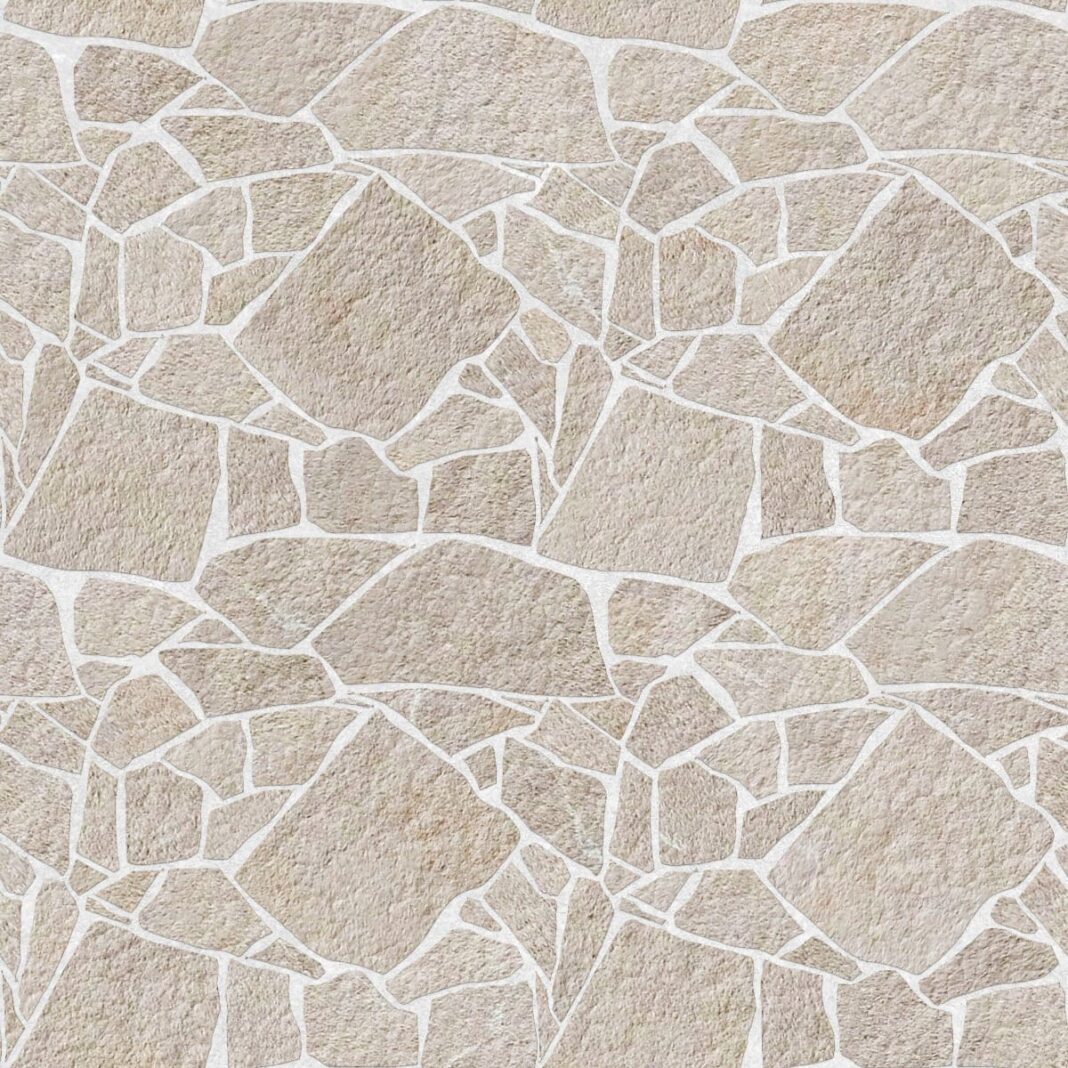
Choosing the right crazy paving stone involves more than selecting a colour you like. The best choice should complement your home’s architecture, suit the intended use of the space and perform well in local conditions for many years. While appearance is important, factors such as durability, surface texture, maintenance requirements and installation quality all influence the long-term success of the project.
When exploring crazy paving stone ideas, it’s worth understanding how different natural stones behave and where they perform best. A stone that works beautifully around a swimming pool may not be suitable for a driveway, while a material chosen purely for its appearance may require more maintenance than expected.
Crazy paving uses irregular pieces of natural stone laid in a freeform pattern, creating a unique finish that feels more organic than traditional paving. Its versatility makes it suitable for everything from contemporary outdoor entertaining areas to heritage gardens and coastal landscapes.
Start by Understanding How the Space Will Be Used
The intended use of the area should guide every paving decision.
Different outdoor spaces place different demands on paving materials. A driveway must support vehicle loads, while a pool surround needs to provide good slip resistance and remain comfortable underfoot during summer.
Think about how the area will be used every day.
Common applications include:
- Pool surrounds
- Garden pathways
- Courtyards
- Outdoor entertaining areas
- Patios
- Driveways
- Entryways
- Landscape features
For entertaining areas, comfort, appearance and ease of maintenance are often priorities. Pathways should provide stable footing in wet weather, while driveways require stronger stone capable of handling heavier loads.
Selecting a stone based on function first usually leads to better long-term results.
Choose a Style That Complements Your Home
One of the biggest advantages of crazy paving is its ability to suit a wide variety of architectural styles.
Contemporary homes often pair well with lighter natural stones featuring subtle variation. Limestone and light granite create clean, elegant outdoor spaces while still showcasing the character of natural stone.
Coastal homes frequently benefit from soft cream, beige and grey tones that complement timber decking, native planting and relaxed outdoor living areas.
Traditional and heritage homes often suit richer colours and more textured stones such as porphyry, which adds depth and a sense of permanence to established gardens.
Rather than choosing the paving in isolation, consider how it will work alongside:
- External walls
- Roof colours
- Pool coping
- Landscaping
- Garden edging
- Outdoor furniture
- Retaining walls
- Feature planting
The best crazy paving enhances the overall landscape rather than competing with it.
Understand the Different Stone Options
Natural stone varies considerably in appearance, strength and performance.
Limestone
Limestone remains one of Australia’s most popular paving materials because of its timeless appearance and versatility.
It offers:
- Soft natural colours
- Comfortable surface temperatures
- Elegant appearance
- Good suitability for courtyards, pathways and pool surrounds
Its understated look complements both modern and traditional landscape designs.
Porphyry
Porphyry is recognised for its strength and naturally textured finish.
Benefits include:
- Excellent durability
- Natural slip resistance
- Rich colour variation
- Suitable for driveways, pathways and entertaining areas
Its irregular texture makes it particularly popular in outdoor environments where additional grip is desirable.
Granite
Granite is one of the hardest natural paving stones available.
It performs well in:
- High-traffic walkways
- Driveways
- Commercial landscapes
- Outdoor entertaining areas
Its dense structure helps maintain its appearance under heavy use.
Travertine
Travertine is widely used throughout outdoor living spaces because of its lighter colour palette and relaxed appearance.
It is commonly selected for:
- Pool surrounds
- Patios
- Alfresco areas
- Courtyards
Its naturally cooler surface can also improve comfort around swimming pools during warmer weather.
Surface Texture Is Just as Important as Appearance
Many homeowners focus on colour without considering surface texture.
Texture has a significant influence on safety, particularly in areas regularly exposed to water.
According to Australian Standards AS 4586, slip resistance should be considered when selecting pedestrian paving materials. Pool surrounds, garden paths and outdoor entertaining areas generally benefit from finishes that provide additional grip under wet conditions.
Different finishes create different visual effects.
For example:
- Natural split finishes provide greater texture.
- Honed finishes create a smoother appearance.
- Lightly textured finishes balance appearance and practicality.
Choosing the appropriate finish helps improve both safety and long-term usability.
Natural Colour Variation Creates Individual Character
One reason many homeowners choose natural stone is that no two pieces are exactly alike.
Variations in mineral composition create subtle differences in:
- Colour
- Veining
- Surface texture
- Pattern
- Natural markings
These variations give crazy paving its distinctive character and ensure every installation is unique.
Colour selection also influences how outdoor spaces feel.
Lighter stones can make compact courtyards appear larger and brighter, while darker tones introduce contrast and definition. Mid-tone colours often provide the greatest flexibility when matching existing landscaping and architectural finishes.
Installation Is Just as Important as Stone Selection
Even premium natural stone can underperform if it is installed incorrectly.
Crazy paving requires careful planning to achieve an attractive balance between the irregular stone shapes while maintaining consistent joint widths and a practical layout.
Proper installation also includes:
- Suitable base preparation
- Correct drainage
- Appropriate joint spacing
- Stable foundations
- Stone thickness suited to the application
Drainage deserves particular attention. Poor water management can contribute to staining, algae growth, movement and joint deterioration over time.
Professional installation helps ensure the finished paving performs as well as it looks.
Think About Long-Term Maintenance
Every natural stone requires some level of maintenance, although requirements vary depending on the material and environment.
Typical maintenance may include:
- Sweeping leaves and debris
- Occasional washing
- Removing stains promptly
- Inspecting joints
- Applying sealers where appropriate
Choosing a stone that suits its intended application often reduces maintenance requirements and helps preserve its appearance for many years.
Discussing maintenance expectations before selecting a stone allows homeowners to choose a material that matches both their lifestyle and the amount of ongoing care they are prepared to undertake.
Plan the Entire Landscape Together
The most successful crazy paving projects are designed as part of the broader outdoor landscape rather than as an isolated feature.
Considering elements such as garden beds, retaining walls, pools, outdoor kitchens, pathways and planting together creates a more cohesive result. It also allows colours, textures and materials to work together throughout the property.
This holistic approach often produces outdoor spaces that feel larger, more connected and more functional while showcasing the natural beauty of the stone.
Conclusion
The best crazy paving stone ideas combine appearance, practicality and long-term durability. Choosing the right stone involves considering how the space will be used, the style of the home, surface texture, maintenance requirements and installation quality rather than focusing on colour alone.
When carefully selected and professionally installed, crazy paving creates a unique outdoor surface that adds character, improves functionality and complements the surrounding landscape for many years. By taking the time to evaluate different stone types and planning the project as part of the overall landscape design, homeowners can create an outdoor space that is both visually striking and built to last.