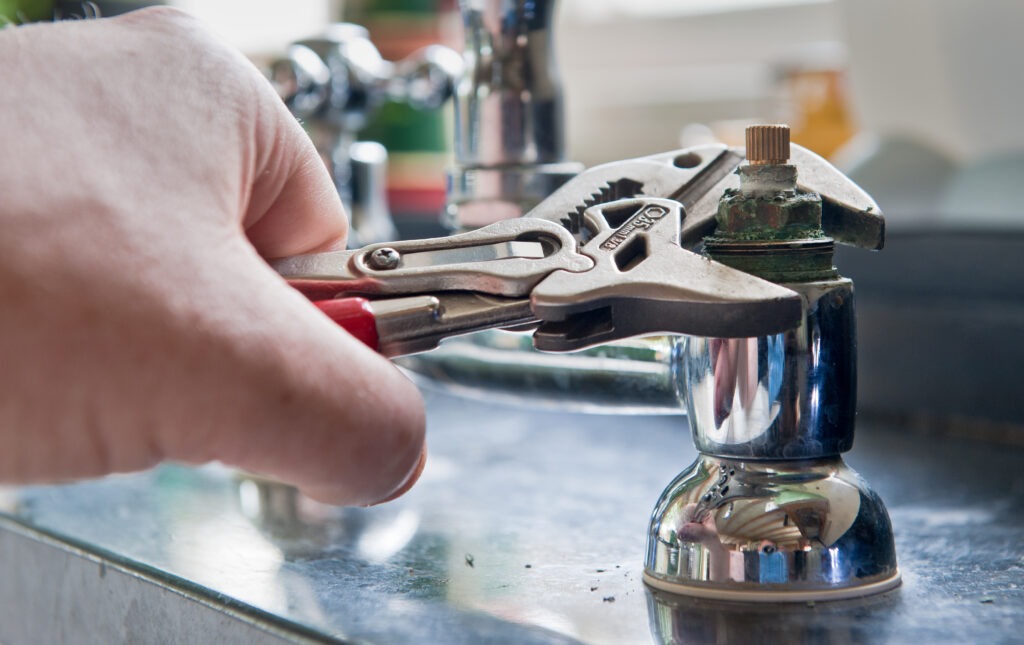
Choosing between plumbing repair and replacement depends on the age of the component, the extent of the damage, how often the problem returns, and the long-term cost. A small, isolated defect may only need repair, while recurring leaks, widespread corrosion, or an aging system may make replacement the safer and more economical choice.
Should I Repair or Replace a Leaking Pipe?
A leaking pipe does not always need to be completely replaced. When the problem affects one accessible fitting or a short section of otherwise sound pipe, a targeted repair may be enough.
Replacement may be the better choice when the leak is one of several failures, the surrounding pipe is corroded, or the plumbing material is deteriorating throughout the home.
Homeowners should consider:
- Where the leak is located
- Whether the damaged area is accessible
- The age and condition of the pipe
- Whether similar leaks have happened before
- The condition of nearby fittings
- The cost of opening and restoring walls or floors
- Whether the repair will provide a reliable long-term result
A plumber should inspect more than the visible leak. Repairing one connection may not solve the problem when the surrounding plumbing is also weakened.
Pipe Repair May Be Better When:
- This is the first isolated leak.
- Only one fitting or a short section of pipe is damaged.
- The surrounding pipe is relatively new and in good condition.
- The damaged section is easy to access.
- Water remains clear and pressure is stable.
- One repair is likely to solve the problem.
- There are no signs of widespread corrosion.
Pipe Replacement May Be Better When:
- Leaks repeatedly appear in different areas.
- Corrosion or deterioration affects a larger section.
- The pipe is old or near the end of its useful life.
- Repeated repairs require opening walls, ceilings, or floors.
- Water appears rusty or discolored.
- Water pressure has gradually declined.
- Several previous repairs have already been completed.
- The combined cost of repeated repairs is approaching the cost of replacement.
Is Repeated Plumbing Repair Worth It?
Repeated repair may not be worthwhile when the same component continues failing or when new problems appear throughout the plumbing system.
One repair can be reasonable. A second repair may also make sense when the failures are unrelated. However, frequent service calls often indicate that the underlying cause has not been corrected.
Recurring plumbing problems may result from:
- Aging pipes
- Excessive water pressure
- Improper installation
- Hidden corrosion
- Incorrect drain slope
- Damaged sewer lines
- Outdated fixture components
- Improper venting
- Repairs that treated the symptom rather than the cause
Homeowners should review how much they have spent on previous work and whether those repairs improved the system’s reliability.
A professional plumber repair evaluation can help determine whether another isolated repair is appropriate or whether replacement would reduce future disruption and expense.
When Should Plumbing Fixtures Be Replaced?
Toilets, faucets, garbage disposals, and water heaters can often be repaired when the problem involves one replaceable part.
Replacement may be more practical when:
- The fixture repeatedly leaks.
- Replacement parts are difficult to find.
- The fixture is heavily corroded.
- Repairs no longer restore reliable operation.
- Water use is unnecessarily high.
- The fixture is cracked or physically damaged.
- The repair cost is significant compared with replacement.
- The homeowner wants improved efficiency or performance.
The appearance of a fixture should not be the only consideration. An older faucet may still function well, while a newer fixture may require replacement because of internal damage or poor installation.
Toilet Repair or Replacement
A running, leaking, loose, or frequently clogged toilet may need repair or replacement depending on the cause.
Toilet Repair May Be Better When:
- The toilet has developed its first minor problem.
- The flapper, fill valve, seal, or supply line is faulty.
- The bowl and tank are not cracked.
- The toilet is secure and the flange is in good condition.
- The toilet works normally apart from one replaceable component.
- Standard replacement parts are readily available.
- The repair is expected to restore reliable operation.
Toilet Replacement May Be Better When:
- The toilet repeatedly runs, leaks, or clogs.
- The bowl or tank is cracked.
- The toilet is old, inefficient, or difficult to service.
- Replacement parts are no longer available.
- The toilet base moves even after adjustment.
- The fixture requires several replacement components.
- Previous repairs have not solved the problem.
- The homeowner wants improved flushing performance or water efficiency.
A toilet leaking around its base should be inspected promptly. The problem may involve the seal, flange, drain connection, or damaged flooring beneath the fixture.
Replacing the toilet alone will not solve the problem when the flange or floor also requires repair.
Faucet Repair or Replacement
A dripping faucet may only need a cartridge, washer, valve, or seal. However, corrosion and discontinued components can make replacement more practical.
Faucet Repair May Be Better When:
- The faucet has developed one isolated drip.
- A washer, cartridge, valve, or connection has failed.
- The faucet body is still in good condition.
- Replacement parts are readily available.
- The fixture is relatively new.
- Water flow and temperature control were reliable before the problem began.
- One standard component will restore normal operation.
Faucet Replacement May Be Better When:
- The faucet has already been repaired several times.
- The faucet body is cracked or heavily corroded.
- Correct replacement parts are discontinued or difficult to obtain.
- The fixture is old and showing widespread wear.
- Water flow remains poor after cleaning or repair.
- Several components need replacement.
- Repair labor and parts approach the cost of a new fixture.
- The faucet is incompatible with the sink or existing supply connections.
Replacement may also be useful when the existing faucet has outdated features or does not meet the homeowner’s current needs.
Water-Heater Repair or Replacement
Water heaters should be evaluated according to their age, tank condition, repair history, and the type of failure.
A replaceable heating component or control may justify repair. A leaking storage tank usually requires replacement because the tank itself normally cannot be permanently repaired.
Water-Heater Repair May Be Better When:
- This is the unit’s first repair.
- A replaceable valve, control, thermostat, or heating component has failed.
- The tank is not leaking.
- The water heater is relatively new.
- Hot-water delivery was reliable before the failure.
- The unit has no major corrosion.
- The repair will restore safe and reliable operation.
- Replacement parts are available.
Water-Heater Replacement May Be Better When:
- The unit has required several recent repairs.
- The tank is leaking.
- The tank or connections are heavily corroded.
- The system is approaching the end of its expected service life.
- Hot-water capacity has steadily declined.
- Temperature problems repeatedly return.
- Energy use appears unusually high.
- Major repairs would provide little additional useful life.
- The unit has unsafe venting or damaged safety components.
Signs that require prompt attention include:
- Water beneath the tank
- Rust around connections
- Damaged venting
- Discolored hot water
- Unusual noises
- Repeated loss of hot water
- Moisture around the base
- A damaged pressure-relief valve or discharge pipe
Sewer-Line Repair or Replacement
Sewer-line problems can be difficult to evaluate because the pipe is underground. A sewer-camera inspection may be needed to identify cracks, root intrusion, buildup, separation, deformation, or collapse.
Sewer-Line Repair May Be Better When:
- The blockage is isolated and has a clear cause.
- One accessible section is cracked or misaligned.
- Most of the pipe remains structurally sound.
- Root intrusion is limited and can be cleared.
- The damaged area can be repaired without replacing the entire line.
- A localized repair is expected to provide a durable solution.
- Previous backups were caused by debris rather than structural damage.
Sewer-Line Replacement May Be Better When:
- Backups repeatedly return after cleaning.
- The line has widespread deterioration.
- Several sections are cracked or separated.
- The pipe is collapsed, deformed, or severely misaligned.
- Roots repeatedly enter through damaged joints.
- Wastewater cannot flow reliably after cleaning.
- Several previous repairs have already been completed.
- The cost of repeated cleaning and repair is approaching replacement cost.
A blockage alone does not always mean the sewer line needs replacement. Grease, debris, or limited root intrusion may be removed.
Replacement may be recommended when camera findings show that the pipe cannot reliably carry wastewater even after cleaning or localized repair.
Garbage Disposal Repair or Replacement
Garbage disposals may stop working because of a jam, electrical problem, worn component, leak, or internal motor failure.
Garbage Disposal Repair May Be Better When:
- The disposal has jammed for the first time.
- The problem involves a reset, blockage, or loose connection.
- The housing is not cracked or leaking.
- The unit is relatively new.
- Normal operation returns after safely clearing the obstruction.
- The motor operates normally after the problem is corrected.
- A simple adjustment can restore safe operation.
Garbage Disposal Replacement May Be Better When:
- The disposal repeatedly jams or overheats.
- The unit frequently stops during normal use.
- The housing is cracked or leaking internally.
- The motor has failed.
- Grinding, humming, or unusual sounds continue.
- The unit is old and increasingly unreliable.
- Repairing internal components is impractical.
- Replacement would provide better performance and reliability.
Do not place your hand inside a garbage disposal. Turn off power to the unit before checking for visible obstructions, and contact a professional when the cause cannot be safely identified.
Should an Old Plumbing System Be Repaired or Repiped?
Repiping means replacing a substantial portion of the home’s water-supply plumbing rather than continuing to repair individual leaks.
Repiping may be worth considering when:
- Leaks occur in several areas.
- Pipes show widespread corrosion.
- Water pressure continues declining.
- Water appears rusty or discolored.
- Several sections contain repeated patches.
- The system uses deteriorated or outdated materials.
- Previous repairs have not improved reliability.
- Accessing each new leak repeatedly damages walls or ceilings.
- Pipe failures are becoming more frequent.
- The homeowner wants a more predictable long-term solution.
A complete repipe is not automatically necessary because one pipe has failed. The decision should be based on the condition of the entire plumbing system.
A plumber may recommend partial replacement when deterioration is limited to:
- One plumbing branch
- One floor
- One section of the house
- One type of pipe material
- An area with repeated failures
Partial replacement can reduce the immediate cost while addressing the section most likely to fail.
Representative Nashville Repair and Replacement Scenarios
The following scenarios show how repair-versus-replacement decisions are commonly made. They are representative examples and are not presented as verified Southern Plumbing Works customer jobs.
Scenario 1: An Isolated Leak Under a Kitchen Sink
Before: A homeowner notices water beneath the sink. Inspection finds one leaking supply-line connection. The surrounding pipes and shutoff valves are in good condition.
Decision: Repair is likely the better option because the failure is isolated, accessible, and straightforward to correct.
After: The damaged connection is replaced, the cabinet is dried, and the plumbing is tested for additional leakage.
Scenario 2: Repeated Leaks in an Older Nashville Home
Before: Different sections of supply pipe have leaked during the previous two years. New corrosion is visible near several fittings, and water pressure has gradually declined.
Decision: Replacing a larger section or repiping may provide better long-term value than continuing to repair each new leak.
After: The deteriorated piping is replaced, water pressure is tested, and the risk of future emergency access work is reduced.
Scenario 3: A Frequently Backing-Up Sewer Line
Before: The main drain has been cleared several times, but backups continue returning. A camera inspection reveals root intrusion and separated joints in multiple locations.
Decision: Replacement may be more reliable because repeated cleaning does not correct the damaged pipe structure.
After: The defective sewer section is replaced, wastewater flow is restored, and the repaired line is inspected before the work is completed.
How a Licensed Plumber Makes the Recommendation
A licensed plumber should base the recommendation on inspection findings rather than the age of the component alone.
The evaluation may include:
- Identifying the exact source of the problem
- Inspecting surrounding pipes and materials
- Testing water pressure
- Checking drainage performance
- Reviewing the repair history
- Evaluating safety concerns
- Comparing short-term and long-term costs
- Determining whether replacement parts are available
- Checking for corrosion or structural damage
- Explaining whether the proposed work is temporary or permanent
A responsible recommendation should explain:
- Why repair or replacement is being suggested
- What work will be completed
- What caused the failure
- Whether the surrounding plumbing is also affected
- How long the repair is reasonably expected to last
- What may happen if the work is delayed
Homeowners should also ask whether the recommendation addresses the underlying cause. Replacing a fixture will not correct excessive water pressure, improper venting, damaged drains, or poor installation elsewhere in the system.
Questions to Ask Before Approving the Work
Before choosing repair or replacement, ask:
- What caused the problem?
- Is the damage isolated or widespread?
- What is the condition of the surrounding plumbing?
- How long is the repair reasonably expected to last?
- Is this problem likely to happen again?
- Are replacement parts available?
- What work is included in the estimate?
- Will walls, flooring, cabinets, or landscaping need restoration?
- Is there a warranty on the work?
- Are less disruptive repair options available?
- Would partial replacement be sufficient?
- What happens if I delay the repair?
- Will additional work require my approval?
The lowest initial price may not always provide the best value. A repair that repeatedly fails can create additional labor costs, water damage, inconvenience, and disruption.
Frequently Asked Questions
Should I repair or replace a leaking pipe?
Repair may be appropriate when the leak affects one accessible section and the surrounding pipe is in good condition. Replacement may be better when leaks repeatedly occur or the pipe shows widespread corrosion.
Is repeated plumbing repair worth it?
Repeated repair may not be worthwhile when the same problem continues returning. Ask a plumber to identify the underlying cause and compare the cumulative repair cost with partial or complete replacement.
When should plumbing fixtures be replaced?
Replacement should be considered when a fixture is cracked, heavily corroded, inefficient, difficult to repair, or requires frequent service.
Does an old home always need repiping?
No. The home’s age alone does not determine whether repiping is needed. A plumber should evaluate the pipe material, condition, repair history, water pressure, and evidence of corrosion or leakage.
Can a sewer line be repaired without full replacement?
In some cases, yes. A localized damaged section may be repaired. Widespread collapse, separation, deformation, or deterioration may require more extensive replacement.
Should I replace a water heater that still works?
Not necessarily. A functioning water heater may only need maintenance or a minor repair. Replacement may be appropriate when the tank leaks, corrosion is extensive, performance has declined, or repeated repairs are required.
Get a Professional Repair-or-Replacement Assessment
The correct decision is not always the option with the lowest immediate price. Homeowners should consider reliability, expected service life, future repair risk, access costs, and the condition of the surrounding plumbing.
A qualified Nashville plumber can inspect the problem, explain the available options, and help determine whether repair, partial replacement, or complete replacement is the most practical solution.
Southern Plumbing Works provides residential and commercial plumbing repair, water-heater service, sewer and water-line work, drain solutions, fixture services, and other plumbing support throughout the Nashville area.
Call (615) 205-7656 or schedule an inspection to receive a recommendation based on the actual condition of your plumbing system.