Technology continues to reshape nearly every aspect of healthcare, and elder care is no exception. As the senior population grows, medical professionals and innovators are developing new tools designed to improve health outcomes, enhance safety, and support independence. These advancements are helping older adults receive more personalized care while allowing families and healthcare providers to respond more effectively to changing needs.
From remote monitoring systems to cutting-edge wearable devices, today’s medical technologies are transforming how seniors manage chronic conditions and maintain their well-being. Understanding these innovations can help families make informed decisions about care and appreciate the many ways technology is improving life for older adults.
Remote Patient Monitoring
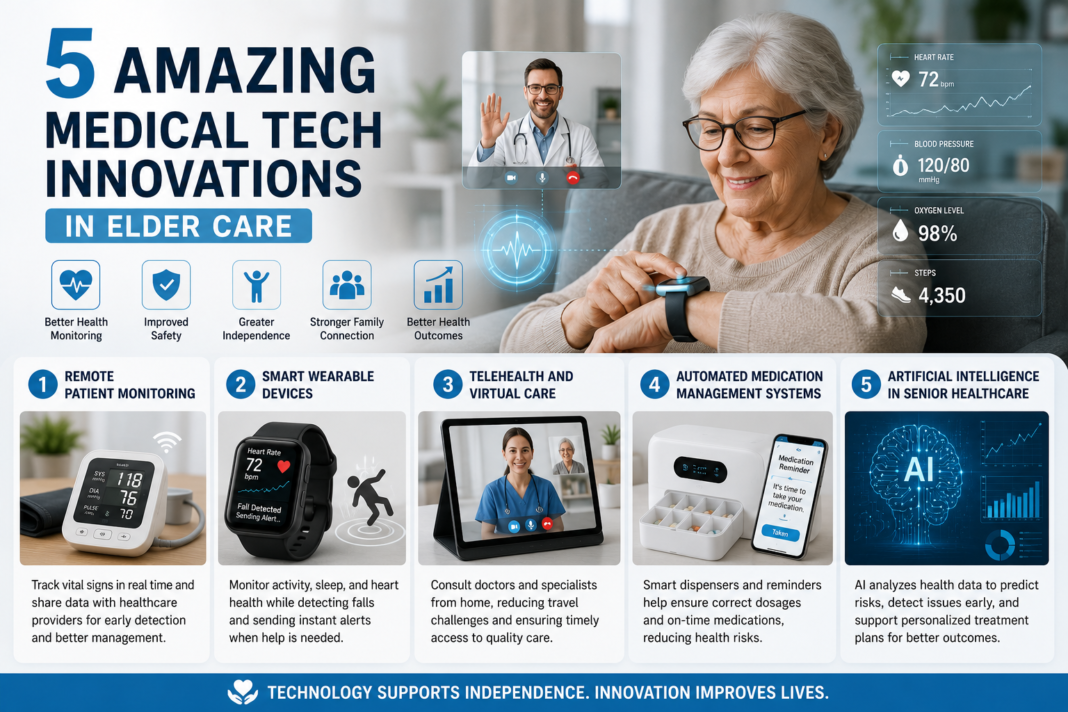
One of the most impactful innovations in elder care is remote patient monitoring. This technology allows healthcare professionals to track important health information without requiring seniors to visit a medical office frequently. Devices can measure vital signs such as blood pressure, heart rate, oxygen saturation, blood glucose levels, and weight.
The continuous flow of health data enables providers to identify potential concerns before they develop into serious medical issues. Early intervention often helps reduce hospital admissions and improves the management of chronic conditions.
Remote monitoring also gives seniors greater peace of mind. Knowing that healthcare providers can oversee important health metrics helps many older adults feel more secure while maintaining their independence.
Smart Wearable Devices
Wearable technology has become increasingly sophisticated and useful for seniors. Smartwatches and health trackers can monitor physical activity, sleep patterns, heart rhythms, and other important indicators throughout the day.
Many devices now include fall-detection capabilities that automatically notify caregivers or emergency contacts when a fall occurs. This feature can be especially valuable for seniors who live alone or have mobility concerns.
Wearables also encourage proactive health management by helping users stay aware of their activity levels and overall wellness. These tools provide valuable information that can support healthier habits and improved outcomes.
Telehealth and Virtual Care
Telehealth has revolutionized access to healthcare for many seniors. Virtual appointments allow patients to consult with doctors, specialists, and other healthcare professionals from the comfort of their homes.
This innovation is particularly beneficial for individuals with transportation challenges, mobility limitations, or chronic health conditions that make frequent travel difficult. Telehealth reduces barriers to care while allowing seniors to receive timely medical guidance.
Virtual care can also make it easier for family caregivers to participate in appointments, ask questions, and stay informed about treatment plans. Improved communication often contributes to better overall care coordination.
Automated Medication Management Systems
Managing multiple medications can be challenging, especially for seniors with complex treatment plans. Automated medication management systems are helping reduce errors and improve adherence to prescribed schedules.
These systems may include smart pill dispensers, reminder applications, and automated alerts that notify caregivers when medications are missed. By ensuring that prescriptions are taken correctly and consistently, these technologies can significantly improve health outcomes.
Families often appreciate the added reassurance these systems provide. Medication errors can have serious consequences, and technology offers an effective way to minimize risks while supporting independence.
Artificial Intelligence in Senior Healthcare
Artificial intelligence is becoming an increasingly valuable tool in elder care medicine. AI-powered systems can analyze large amounts of health data, identify patterns, and assist healthcare providers in making informed clinical decisions.
These technologies can help predict health risks, detect potential complications, and support more personalized treatment plans. Rather than relying solely on generalized approaches, providers can use data-driven insights to tailor care to individual needs.
Families considering assisted living in Sheboygan, WI may find that many modern senior care providers are incorporating advanced technologies to enhance resident care, monitor wellness, and support more individualized healthcare strategies.
How Technology Enhances Independence
One of the most significant benefits of medical technology is its ability to help seniors maintain independence for longer periods. Innovations that support medication adherence, health monitoring, communication, and emergency response allow many older adults to continue managing their daily lives with confidence.
Rather than replacing human care, these tools complement existing support systems. They provide additional resources that help seniors remain active, engaged, and informed about their health.
For family members, technology also offers peace of mind. Access to real-time information and enhanced safety features can reduce anxiety while strengthening care coordination.
The Future of Elder Care Innovation
Medical technology continues to evolve rapidly. Future innovations may include more advanced home monitoring systems, expanded use of artificial intelligence, improved robotic assistance devices, and highly personalized treatments based on genetic and health data.
Researchers and healthcare organizations remain focused on finding new ways to improve the aging experience. These efforts aim to promote healthier aging while reducing healthcare challenges commonly associated with later life.
As innovation continues, seniors can expect increased access to tools that support both independence and quality of life. The future of elder care will likely become even more connected, proactive, and personalized.
Conclusion
Medical technology is transforming elder care in remarkable ways. Remote patient monitoring, wearable health devices, telehealth services, automated medication management systems, and artificial intelligence are helping seniors receive more effective and personalized care than ever before.
These innovations support independence, improve safety, and enhance healthcare outcomes while providing valuable reassurance to families and caregivers. As technology continues to advance, older adults can look forward to even greater opportunities to maintain their health, well-being, and quality of life throughout the aging process.
The rapid evolution of healthcare technology highlights how innovations such as artificial intelligence, wearable devices, remote monitoring, and digital health platforms are transforming patient care around the world. Readers interested in the latest developments in medical technology, AI, consumer gadgets, and emerging digital innovations can explore more expert reviews and technology news on Root-Nation, where cutting-edge tech trends are covered in depth.