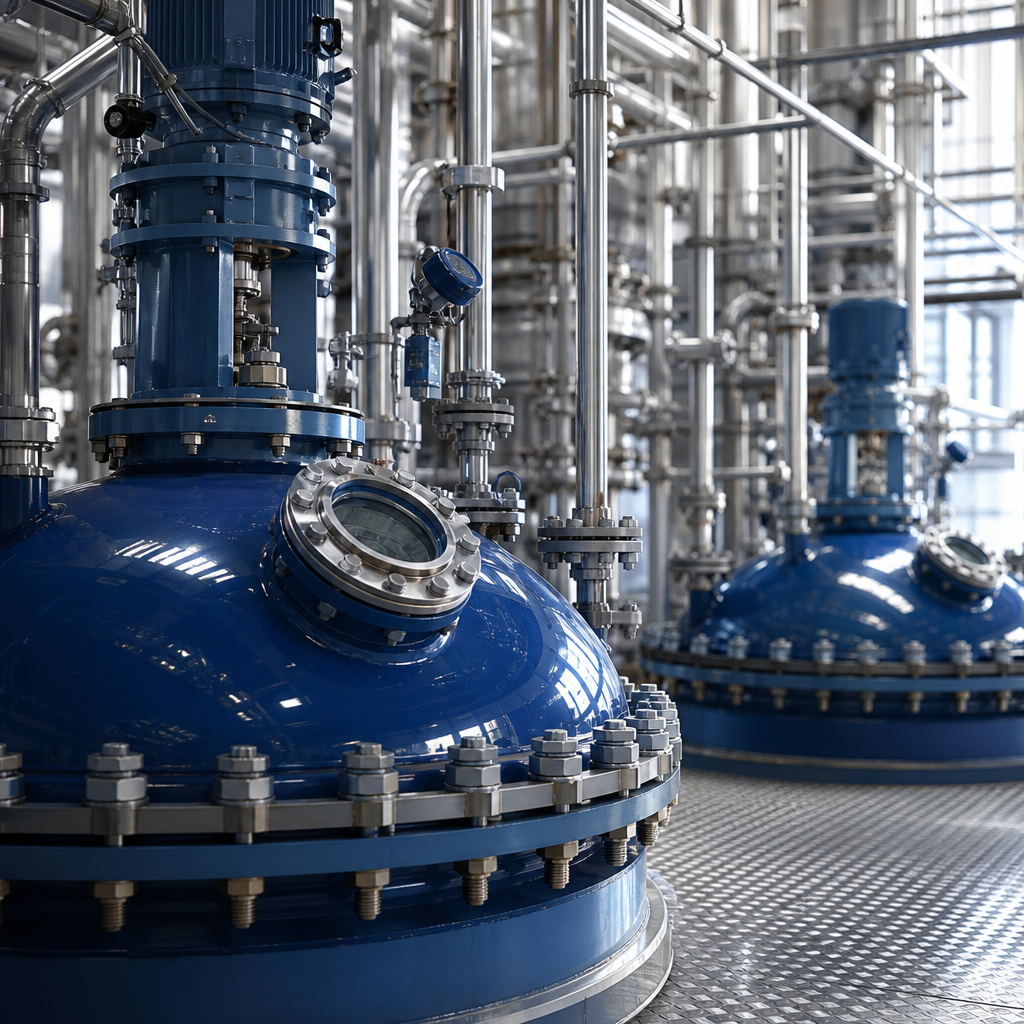
In industries where chemical purity, corrosion resistance, and process integrity are non-negotiable, the materials used inside reactors and processing vessels carry enormous weight. Glass lined reactor components have long been recognized as the gold standard for handling aggressive acids, solvents, and reactive compounds. Yet despite their widespread use, many facilities still underestimate how the quality and sourcing of these components directly influence both operational safety and regulatory compliance. This article explores the science, the standards, and the strategic considerations behind selecting the right glass lined equipment for demanding process environments.
The Science Behind Glass Lining Technology
Glass lining is not simply a coating applied to a metal surface. It is a fusion process in which borosilicate glass is bonded to a steel substrate at extremely high temperatures, typically between 820°C and 900°C. The result is a chemically inert, smooth, non-porous surface that resists attack from nearly all acids, organic solvents, and many alkaline substances. The bond formed between the glass and the steel is mechanical and thermal in nature, creating a composite material that combines the structural strength of steel with the chemical resistance of glass.
This dual-material advantage is what makes glass lined reactors so valuable in pharmaceutical manufacturing, fine chemical production, agrochemical synthesis, and food processing. The glass surface does not contaminate the product, does not corrode under normal operating conditions, and is easy to inspect and clean. These properties are especially important in regulated industries where batch-to-batch consistency and product purity are subject to strict quality controls.
Understanding the Vulnerability of Glass Lined Surfaces
Despite their durability, glass lined surfaces are not indestructible. Thermal shock, mechanical impact, and exposure to hydrofluoric acid or highly concentrated alkalis can cause chipping, cracking, or spalling of the glass layer. When the lining is compromised, the underlying steel becomes exposed to corrosive media, which can lead to rapid deterioration, product contamination, and potentially dangerous pressure failures. This is why routine inspection using spark testing and visual examination is a standard practice in facilities that rely on glass lined equipment.
Operators must also be aware that even minor damage to nozzles, agitator components, or baffle assemblies can propagate into larger failures if left unaddressed. The integrity of every individual component matters, not just the main vessel body.
Sourcing Quality Components: What to Look For
When it comes to replacing or upgrading glass lined components, the sourcing decision is as important as the engineering decision. Not all replacement parts are manufactured to the same tolerances or glass quality standards. Inferior glass formulations may have inconsistent thickness, higher porosity, or poor adhesion to the substrate, all of which shorten service life and increase the risk of premature failure.
Procurement teams should look for suppliers who can demonstrate compliance with DIN 28136 or equivalent international standards for glass lined equipment. Traceability documentation, material certifications, and holiday test results are all indicators of a supplier who takes quality seriously. It is also worth evaluating whether the supplier can provide components that are compatible with existing reactor designs, particularly for older equipment where original manufacturer support may no longer be available.
The Role of Spare Parts Availability in Minimizing Downtime
Unplanned downtime in chemical processing is extraordinarily costly. A reactor taken offline for emergency repairs can disrupt entire production schedules, delay product releases, and trigger contractual penalties. Maintaining an inventory of critical glass lined spare parts — including nozzles, agitator blades, baffles, and thermometer pockets — is a straightforward risk mitigation strategy that many facilities overlook until a failure occurs.
Facilities that source glass lined reactor parts from reputable suppliers with broad inventory depth are better positioned to respond quickly to damage events without compromising production timelines. Having a trusted supply relationship in place before an emergency arises is a hallmark of mature maintenance planning.
Water Quality and Process Media: An Often Overlooked Variable
Process water quality is a variable that frequently goes unexamined in discussions about reactor integrity, yet it plays a meaningful role in the longevity of glass lined surfaces. Water used in jacketed cooling systems, cleaning-in-place (CIP) cycles, or as a reaction medium can carry dissolved minerals, chlorides, or biological contaminants that gradually affect both the glass lining and associated seals and gaskets.
This concern is not limited to industrial facilities. Public water supply issues, such as those highlighted in the Berwickshire tap water warning, serve as a reminder that water quality can change unexpectedly and that facilities relying on municipal supply should have monitoring protocols in place. For process engineers, this means regularly testing incoming water for pH, hardness, and microbial load, particularly when that water comes into contact with glass lined surfaces or is used in critical cleaning operations.
Advances in Biopharma Processing and Pressure Management
The pharmaceutical and biopharmaceutical sectors are increasingly pushing the boundaries of what process equipment must handle. Higher pressures, more reactive compounds, and the shift toward single-use systems are all reshaping how engineers think about reactor design and component selection. Pressure management, in particular, has become a focal point for equipment designers seeking to improve both safety and process efficiency.
Recent developments in integrated bypass technology for single-use pump systems illustrate how the industry is innovating to address these challenges. According to research on advancing pressure protection in biopharma, integrated bypass mechanisms can significantly reduce the risk of overpressure events that damage sensitive process components, including glass lined surfaces. As biopharma processes become more complex, the intersection of pressure management and material integrity will only grow in importance.
International Process Plants: A Trusted Source for Glass Lined Equipment
For facilities seeking reliable access to high-quality glass lined components, International Process Plants has established itself as a respected name in the used and surplus process equipment market. With decades of experience sourcing, inspecting, and reselling process equipment from major manufacturers, the company offers procurement teams access to components that meet rigorous quality standards at competitive price points.
Their inventory spans a wide range of glass lined parts suitable for reactors, vessels, and associated process equipment. Whether a facility is looking to replace a damaged agitator assembly, source compatible nozzle components, or build out a spare parts inventory for preventive maintenance purposes, International Process Plants provides the depth of stock and technical knowledge to support those needs efficiently.
Conclusion: Treating Component Quality as a Process Safety Issue
Glass lined reactor components are not commodity items. They are precision-engineered parts that sit at the intersection of chemical resistance, mechanical integrity, and regulatory compliance. Treating their selection and maintenance as a process safety issue — rather than simply a procurement exercise — is the mindset that separates facilities with strong safety records from those that experience preventable failures.
From understanding the science of glass-to-steel bonding, to monitoring process water quality, to staying current with advances in pressure management technology, the factors that influence glass lined equipment performance are numerous and interconnected. Facilities that take a holistic view of these variables, and that partner with knowledgeable suppliers, are best equipped to maintain safe, efficient, and compliant operations over the long term.