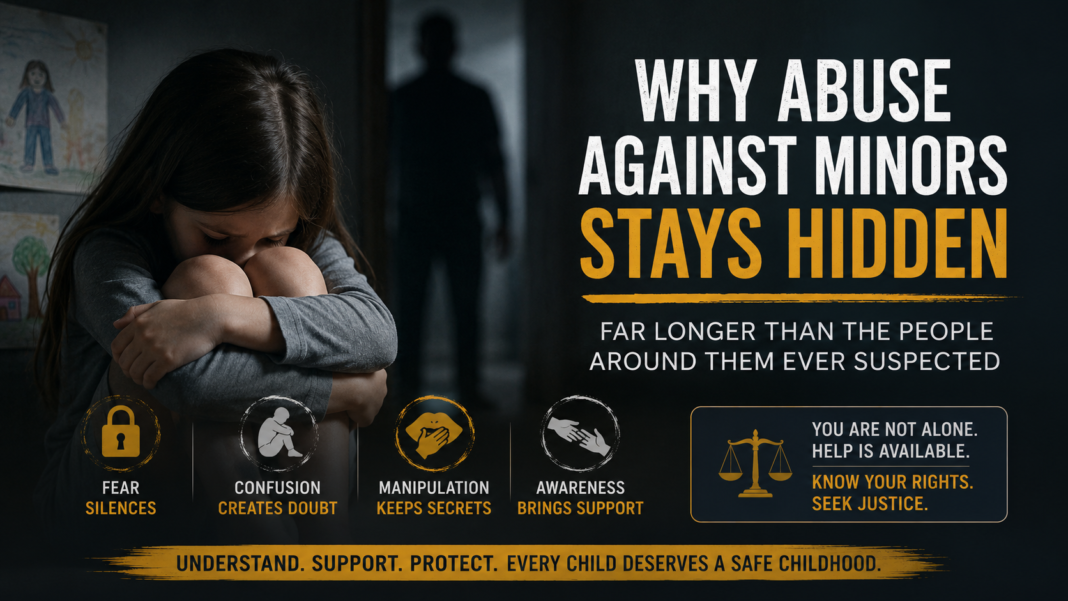
Many people assume that abuse against minors would be noticed right away, but that is often not the reality. Children may remain silent for months or even years because of fear, confusion, shame, or manipulation by the abuser. For families seeking answers and support, a sexual abuse lawyer in Phoenix may help them better understand their legal options and next steps. Delayed disclosure is far more common than many people realize, and it does not diminish the seriousness of what occurred. Understanding why abuse stays hidden can help communities recognize warning signs and better support survivors.
Why Many Children Do Not Tell Anyone Right Away
There are many reasons why children may not immediately disclose abuse. Understanding these barriers can help families, educators, and communities respond with greater compassion and awareness.
Fear of Not Being Believed
Many children worry that adults will doubt their story or dismiss what they are trying to say. This fear can be especially strong if the person involved is trusted, respected, or well-liked by others. Children may also question their own memories or feelings, particularly if they have been manipulated by the abuser. As a result, they may stay silent because they are unsure how others will react or whether anyone will take them seriously.
Fear of Getting Someone in Trouble
In many cases, the abuser is not a stranger but someone the child knows personally. Children may feel conflicted because they care about the person or fear the consequences that could follow a disclosure. Some children worry that speaking up could lead to family arguments, financial difficulties, or major changes at home. Even when they know something is wrong, they may carry the burden alone to avoid disrupting the lives of those around them.
Not Fully Understanding What Happened
Younger children often lack the vocabulary and life experience needed to describe abusive behavior. They may know that something felt uncomfortable or confusing without understanding that it was abuse. As children grow older, they sometimes gain a clearer understanding of what occurred and why it was harmful. This can lead to disclosures months or even years after the abuse first took place.
How Abusers Often Keep Abuse Hidden
Abuse against minors often remains undiscovered because offenders may use manipulation and secrecy to maintain control. Understanding these tactics can help explain why abuse sometimes goes unnoticed for long periods of time.
Using Secrecy and Threats
Abusers may encourage children to keep certain interactions secret, often framing them as special or private. A child may feel pressured to stay silent because they have been led to believe that telling someone would cause problems. In some situations, threats are used to create fear and maintain control. Children may worry about punishment, embarrassment, or harm to themselves or loved ones if they speak up about what happened.
Taking Advantage of Positions of Trust
People in roles of power or influence sometimes naturally have more opportunities to be with children, and others might not even consider them capable of wrongdoing. They could be family members, babysitters, coaches, teachers, church leaders, or any other trusted adults. When the accused is a person well-known in the family or community, it is quite normal for people to have a hard time accepting that the abuse has actually happened. Sadly, this doubt may result in the help being postponed, and the harmful conduct may be hidden for a longer period.
Signs That Adults May Miss
Children who have been abused won’t always tell what happened. Often, the signs show up as changes in their behavior, emotions, or everyday habits, and those changes can be easily mistaken for other difficulties.
Changes in Behavior
Sometimes a kid who normally loves being with others and talking a lot can suddenly become shy, quiet, and unwilling to do things that they used to enjoy. It is definitely true that changes like these can result from a whole lot of different things. But if the child is really changing a lot in a very different way, these changes in behavior could be a sign that the child needs support and someone to talk with. Some kids could even show behaviors that are usually connected to anxiety, like being irritable, overly sensitive, or having increased worries. Still, other kids may at times show anger, be afraid, and have trouble trusting people, even those whom they had trusted before and felt comfortable around.
Changes in School Performance
When a child experiences trauma, it can result in difficulties with focusing, remembering, and becoming involved in the classroom. A big drop in a student’s marks or the student becoming uninterested in school could indicate that the child is going through some tough times. The child may also show signs of more frequent absences, lack of concentration, or changes in behavior at school. It is not always the case that academic difficulties suggest that a child is being abused, but sudden and unexplained changes ought not to be disregarded.
Physical and Emotional Warning Signs
Sometimes kids have trouble sleeping, get nightmares often, have headaches or stomach aches, or complain about other physical aches that a doctor cannot really explain. Such symptoms may even be a sign of emotional distress that the child cannot put into words. Emotional symptoms may consist of low self-esteem, a lot of fear, sadness, or increased anxiety. Adults who focus on patterns rather than on one or two incidents can determine when a child may require extra help and protection.
Why Disclosure Often Happens Years Later
For some survivors, they only come to fully process and understand what they have been through when they are mature enough emotionally, figuratively, and have reached an age at which they have more capacity to handle painful emotions. More survivors may wait for the right moment when they can feel completely safe and supported, and have no doubt that they will be believed. Keeping these points in mind, it is quite normal that abuse disclosure happens after a long span of time – months, years, or even decades – after the actual event.
The Impact of Delayed Disclosure on Survivors
Long-term concealment of the experience can cause damaging effects on the survivor’s emotional health, intimate relationships, and the feeling of being safe. Many survivors continue to have the emotional torment of fear, shame, or distrust for a long time after the occurrence of the abuse. Late disclosure may make it difficult to seek help or to take the offender to court; yet it does not make the survivor’s experience any less real.
Conclusion
Abuse against minors often remains hidden because of fear, manipulation, confusion, and the challenges children face when trying to speak about difficult experiences. Recognizing the signs and understanding why disclosure may take years can help families and communities provide meaningful support to survivors. If you have questions about your legal options, speaking with a sexual abuse lawyer in Phoenix can help you better understand the steps available to protect your rights and pursue justice.