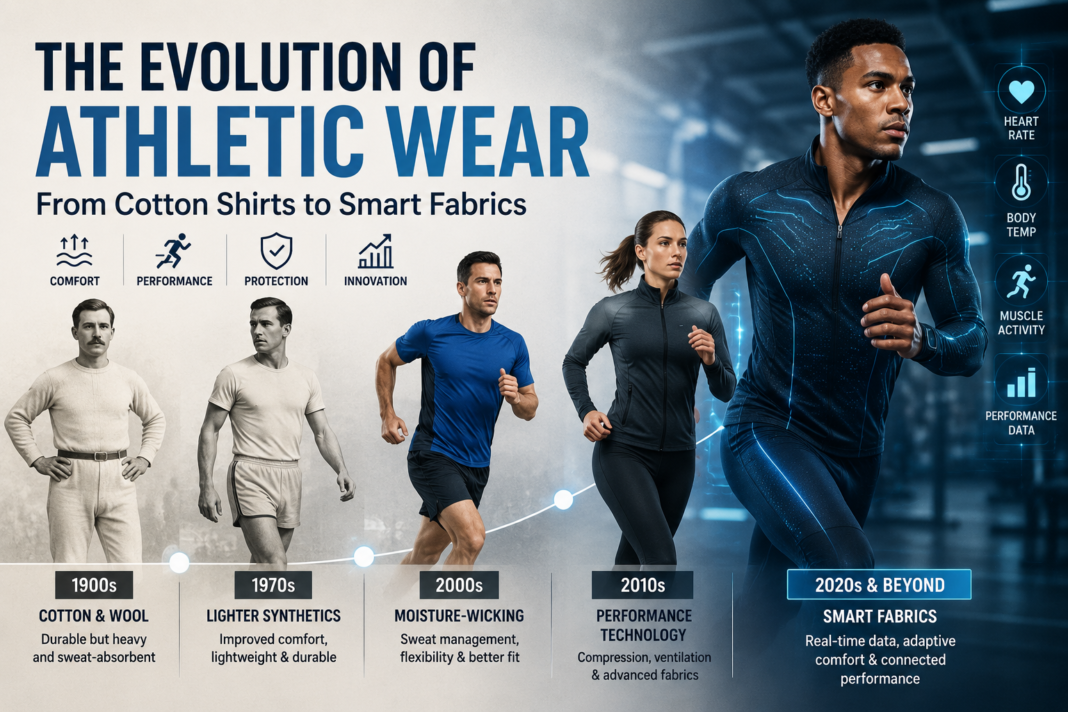
Over the course of a century, we have seen trends in athletic wear take an extreme turn. Where there were once only cotton shirts and heavy wool garments, today’s apparels have become highly engineered to improve comfort, support movement or even collect performance data. This evolution mirrors developments in the science of textiles, manufacturing methods, and scientific rigor in understanding how clothing impacts athletic performance.
As such, modern sports clothing is focused no longer on just looks (you have to get that Instagram shot ready), but also performance and not only for elite athletes or hardcore fitness aficionados either. This, however, has become an indispensable aspect of training, competition and recovery.
As An Industry, Athletic Wear Is New
Whether it be in the late nineteenth or early twentieth century, athletic apparel was innovated for modesty and durability rather than performance. So cotton was the prevailing cloth, since it was most still accessible (nowadays it is easy to find this material and buy cotton fabric online), breathable and additionally cheap. Wool was prevalent for other outdoor sports as well, another natural insulator.
These natural fibers did a decent job for athletes during their time, but they also featured many downfalls. Contrary to what you might expect, cotton absorbs sweat rather than wicking it away from the body which can lead to heavy clothing that clings and becomes uncomfortable during long stretches of physical exertion. Wool – warm but itchy and restrictive (especially when wet).
Sports apparel, at that time, had little to offer regarding stretch or thermoregulation or moisture management. No, athletes just adapted around what their clothing allowed.
Sports Clothing: The New Performance Era
As competitive sport began to be formally structured in the twentieth century, manufacturers noticed that clothing could aid athletic performance.
Designers began creating lighter pieces with better cuts that provided more range of motion. Each sport then started to need its own special uniform because of the physical attributes needed for performance. They benefited from clothing that was specifically made for runners, cyclists, football players and basketball athletes.
This was an important turn in the way of thinking. Sports clothes have been perceived as not ordinary clothing anymore; it turned into functional equipment and could help to maximize athletic performance.
Synthetic Fabrics Transform the Industry
The development of synthetic fabrics like polyester, nylon and spandex marked one of the most important breakthroughs in sportswear.
In contrast, these fabrics had several advantages over cotton in terms of performance:
- Better moisture management
- Faster drying times
- Greater durability
- Improved elasticity
- Reduced garment weight
- Improved wrinkle and shrink resistance
That was partly to ensure athletes were staying as comfortable as possible while carrying out longer training sessions and competitions. Light materials also alleviated excess stress on their bodies and aided better motion and just more stamina.
Pure synthetics are king today, however they do this via a compromise between performance, durability and price.
Understanding Moisture-Wicking Technology
Moisture Wicking TechnologyA major breakthrough in workout wear that cannot be ignored is specifically moisture-wicking technology.
Unlike regular cotton that absorbs sweat, moisture-wicking fabrics move moisture away from the body to the outside of the garment. From there, the moisture evaporates quickly.
This process helps athletes:
- Stay cooler during exercise
- Reduce skin irritation
- Improve comfort during prolonged activity
- Maintain more consistent body temperature
Moisture management has become a default feature in the entire spectrum of activewear, as it greatly improves the exercise experience through many sports.
Fabric Technology and Athlete Comfort
Athletic wear today is so much more than just lightweight fabric.
Compression apparel is engineered to offer light muscle support and enhance comfort while exercising. Stretch fabrics provide movement without distortion over time. Certain textiles even offer ventilation zones, which enhance airflow in spots where heat naturally accumulates.
The evolution of garment construction has also helped reduce friction with the use of flat seams that restrict chafing while engaging in repeated motion.
Companies that specialize in custom made athletic apparel like usportsgear frequently provide educational resources explaining how various men’s sportswear technologies are chosen based on the needs of certain sports, in fact there’s becoming a much larger link between textile engineering and sports performance.
Sustainability Becomes a Growing Focus
Throughout the years, sustainability has been an essential part of the sports apparel industry as people are now much more cognizant of environment-related issues.
Manufacturers are investing in:
- Polyester made from recycled plastic bottles
- Organic cotton production
- Water-saving dyeing techniques
- Reduced packaging waste
- Longer-lasting performance fabrics
Consumers too are shifting their interest towards products that safely combine long-lasting attributes with earth-safe ones. These days, rather than investing in garments that are rapidly disposed of and replaced, athletes now look for quality sports clothing built to last.
This is a great summary of the challenges facing sustainable innovation, but the future of athletic clothing is here.
The Emergence of Smart Fabrics
The exciting thing about athleisure fashion is the emergence of smart fabrics.
Smart fabrics have the electronic components or proprietary fibers embedded in them to detect heat, humidity, UV sensing and other conditions, which is not possible with traditional textiles.
Some smart clothes in a state of experimentation have the ability to measure:
- Heart rate
- Body temperature
- Muscle activity
- Breathing patterns
- Movement efficiency
These technologies offer athletes and coaches insights that used to be available only through external monitoring devices.
With the evolution of wearable technology, clothing itself might serve as a more important real-time source for performance data.
Looking Toward the Future
The next generation of athletic apparel is likely to involve advanced materials, artificial intelligence, and more connected devices for a greater level of personalisation.
Innovations to come might have these garments able to automatically regulate insulation based on changing weather conditions, sense early signs of fatigue, or facilitate instantaneous biomechanical feedback while training.
These innovations are not without challenges however, meaning that manufacturers and researchers must also deal with some common challenges in developing solutions around affordability, durability, data privacy or environmental impact to ensure these advancements remain practical.
Choosing Athletic Wear Wisely
Choosing athletic clothing is more than just looking for a nice design anymore with so many options available these days.
And as a consumer you should keep in mind some of the following factor like :
- The specific sport or activity
- Fabric breathability
- Moisture management
- Stretch and mobility
- Climate conditions
- Durability
- Sustainability
Knowledge about these properties assist the person for opting apparels which provides comfort and performance along with accompanying personal preferences.
Final Thoughts
From bulky cotton shirts to smart, performance fabrics the evolution of athletic wear is vast. Through recent developments in textile science sports apparel has transitioned from gear that enables movement to equipment, enhances body temperature, helps provide comfort and may soon give real-time health and performance data.
With the ongoing innovation, athletic wear is going to be more adaptable, sustainable and tech-savvy. Materials and designs will undoubtedly continue to evolve, but the primary objective stays unchanged: to help people move better, safer and more efficiently while benefitting from sport and physical activity.