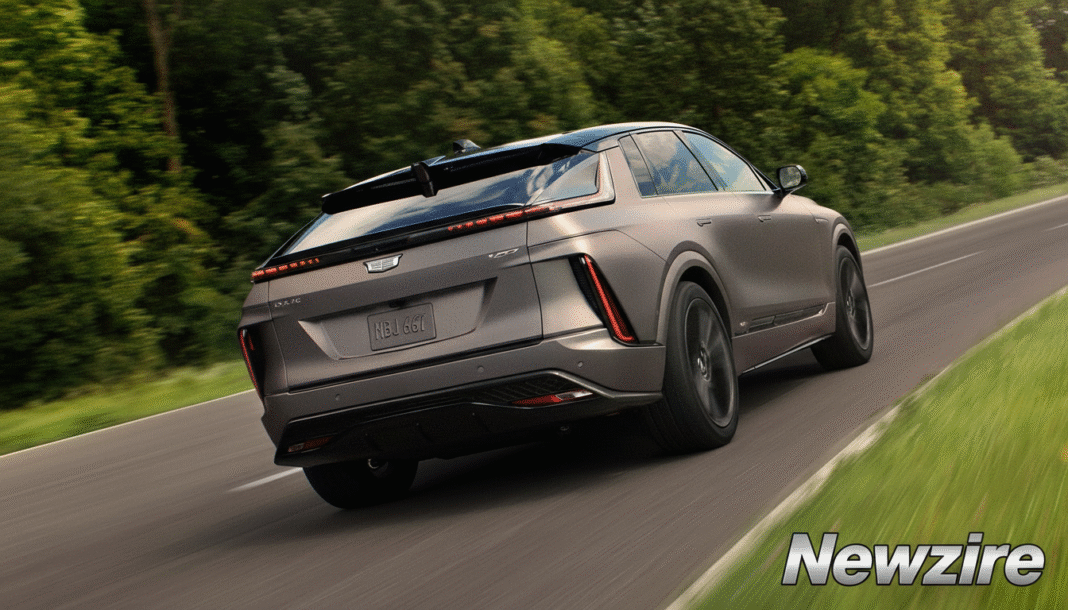
Yes. Tour mode delivers 16 to 19% better efficiency than Sport mode, according to analysis of 15,000 owner reports. On a full charge, that gap costs between 50 and 65 miles of driving range.
The numbers come from real-world data, not manufacturer claims. Owners averaging 70 mph in Tour mode report 2.5 miles per kilowatt-hour. Switch to Sport and that figure drops to 2.1 miles per kilowatt-hour.
Car and Driver’s controlled testing at 75 mph confirms the pattern. Their rear-wheel-drive test vehicle covered 270 miles before depleting the battery. The all-wheel-drive version managed 220 miles at identical speed.
Table of Contents
How Each Mode Changes Battery Consumption
Tour mode keeps throttle response gradual. Press the accelerator halfway and the motors draw consistent power. Sport mode compresses that same power delivery into a sharper curve. Your right foot position hasn’t changed, but the battery discharge rate has.
Regenerative braking works differently too. Tour applies stronger regen when you lift off the accelerator, feeding more energy back into the pack. Sport reduces regen intensity to maintain a coasting feel. Less energy recovered means more consumed overall.
The LYRIQ’s owner manual describes Tour as providing “normal acceleration and comfortable ride tuning.” Sport offers “tightened steering response while more responsive suspension and engine calibration provide a fun-to-drive, sporty performance.” Sport mode prioritises acceleration feel over battery preservation.
For drivers who want to enjoy everything the LYRIQ has to offer without the full upfront cost, accessing it through an EV salary sacrifice is a genuinely attractive route, letting you spread the cost tax-efficiently while still choosing how you drive every single day.
Tour Mode Efficiency:
- 2.5 miles per kWh at motorway speeds
- Stronger regenerative braking
- Smooth power delivery
- Maximum range potential
Sport Mode Efficiency:
- 2.1 miles per kWh at motorway speeds
- Reduced regenerative braking
- Aggressive power delivery
- 50-65 mile range reduction per charge
Professional Testing Backs Owner Data
Motor Trend recorded 286 miles on their all-wheel-drive test vehicle during a road trip range evaluation. Consumer Reports achieved 315 miles with the same configuration at 70 mph.
The variance comes down to testing conditions and mode selection during the run. Current EPA estimates rate the LYRIQ at 95 MPGe city and 82 MPGe highway. Those figures assume balanced driving in Tour mode, not sustained Sport mode acceleration.
All LYRIQ variants use the same 102 kWh Ultium battery pack. The difference in advertised range comes from motor configuration, not battery size. Rear-wheel-drive models achieve 326 miles EPA-estimated range. Dual-motor all-wheel-drive versions drop to 303 or 319 miles depending on specification.
Winter Conditions Compound Efficiency Loss
A Minnesota owner on the Cadillac Owners Forum reports 340 to 350 miles during summer months using Tour mode. Same vehicle, same driver, winter temperatures: 280 miles. A South Dakota driver noted efficiency falling to 1.4 miles per kWh when temperatures dropped below 20°F.
Electric vehicle efficiency drops in cold weather regardless of mode. The LYRIQ’s thermal management system heats the battery cells to maintain performance, drawing power from the pack. Running Sport mode in freezing conditions stacks efficiency losses. Typical winter range reduction sits between 20 and 40%, according to owner reports. That applies before accounting for mode selection.
LYRIQ-V and Velocity Max Performance
The performance variant introduces Velocity Max mode, unlocking all 615 horsepower and 650 lb-ft of torque. Official Cadillac specifications confirm this mode enables 0-60 mph acceleration in 3.3 seconds.
Standard dual-motor LYRIQs carry an EPA rating of 319 miles. The LYRIQ-V drops to 285 miles using identical battery capacity. Velocity Max allows the pack to discharge up to 25% faster when demanding full power. Regular use of Velocity Max will push real-world range well below the official estimate.
One-Pedal Driving Changes City Efficiency
Separate from drive modes, the LYRIQ offers One-Pedal Driving. Activate it and lifting off the accelerator triggers strong regenerative braking, often enough to stop completely without touching the brake pedal.
Owner reports suggest One-Pedal Driving improves city efficiency by 10 to 15% through aggressive energy recapture. It functions in any mode but produces the strongest effect when paired with Tour.
Sport mode with One-Pedal Driving creates unusual behaviour. You get sharp acceleration but aggressive deceleration. Some drivers prefer this combination. Others find it jarring. Your efficiency will land between pure Tour and pure Sport depending on throttle use.
Range Impact in Practice
Planning a 250-mile journey in a rear-wheel-drive LYRIQ rated at 326 miles? Tour mode completes the trip with charge remaining. Sport mode leaves you searching for charging infrastructure.
Daily commuting under 100 miles makes mode selection less critical. You’re charging overnight either way. Longer journeys require considering mode choice the way you’d think about cruise control speed in a petrol vehicle. Both affect distance capability.
The 102 kWh battery holds identical energy regardless of mode. You’re choosing how quickly to spend it.
What the Numbers Mean
Cadillac advertises EPA range figures of 326 miles for rear-wheel-drive, 319 for all-wheel-drive, and 285 for the LYRIQ-V. Those numbers assume mixed driving including efficient city regeneration. They don’t account for freezing temperatures or sustained motorway speeds.
The dashboard range estimate adjusts based on recent driving behaviour. If you’ve been using Sport mode for the past 50 miles, the vehicle predicts you’ll continue. Watch the projected range drop accordingly.
Choose Tour for maximum range. Choose Sport when you value response over distance. The battery doesn’t care about your preference.