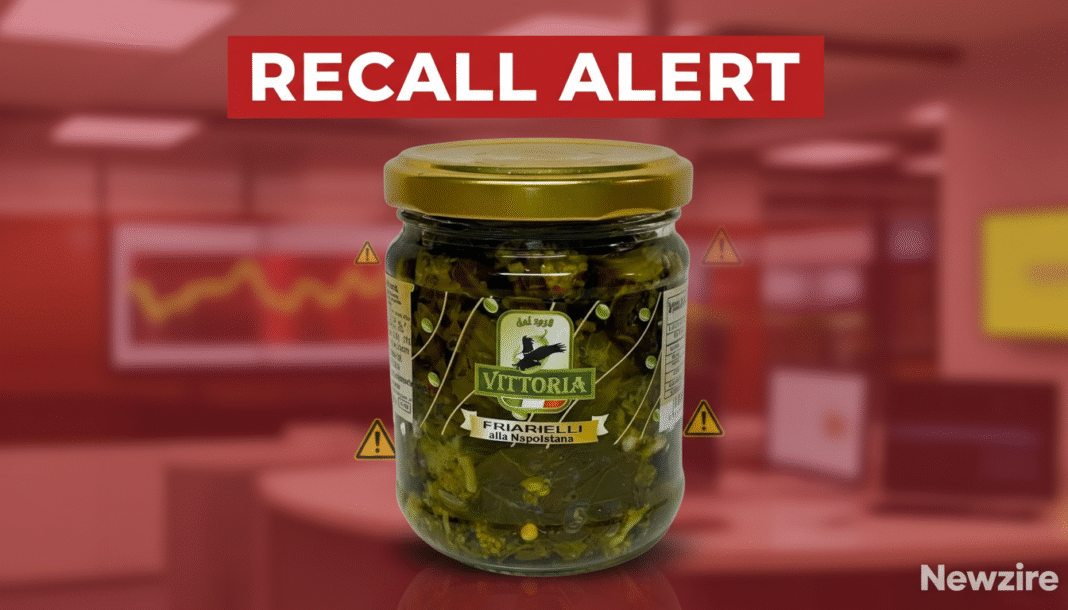
Tests have found deadly bacteria in jars of Italian preserved broccoli sold in England. The bacteria, Clostridium botulinum, produces a toxin that attacks the nervous system and can cause respiratory failure.
Four people died in Italy last summer after eating similar contaminated products. No British cases have been reported, but anyone who bought these jars should return it for a refund and not eat it.
London-based importer La Sovrana recalled the product five months ago, but its long shelf life means contaminated jars could still be sitting in cupboards across the country.
Table of Contents
Batch Code 280325
Only one batch of Vittoria Friarielli alla Napoletana is affected. The 1kg glass jars carry batch code 280325 and a best before date of 23 March 2028. Both numbers appear on the jar’s side panel next to the supplier details.
Friarielli is the Neapolitan term for broccoli rabe, a bitter leafy green preserved in sunflower oil with garlic, salt and chilli pepper. It’s traditionally served with Italian sausages or used in pasta dishes.
The Italian Outbreak
Eighteen people fell ill in Diamante, a coastal town in Calabria, between 3 and 5 August last year. They’d all bought sandwiches from the same street vendor. The sandwiches contained friarielli and sausage.
Luigi di Sarno, a 52-year-old musician from Naples, died from the poisoning. So did Tamara D’Acunto, 45. Nine people face potential criminal charges including manslaughter and distributing harmful food. The vendor, three food company managers who supplied ingredients, and five doctors accused of mishandling the medical emergency are all under investigation.
The vendor had parked his truck in direct sunlight all day before serving customers.
Around the same time in Sardinia, two women died after eating contaminated guacamole at a food festival in Monserrato near Cagliari. Valeria Sollai, 62, and Roberta Pitzalis, 36, both died from botulism poisoning. A 14-year-old girl spent weeks in intensive care.
Italy recorded 36 botulism cases in 2023, according to health officials, the highest figure in Europe. Between 2001 and 2020, there were 452 cases with 14 deaths. Most came from home-preserved foods, particularly in southern regions where traditional preservation methods remain common.
La Sovrana said in its recall statement: “We are recalling this product due to recalls within the Italian food industry.”
Why These Sealed Jars Are Dangerous
Clostridium botulinum grows in sealed containers with no oxygen, low acidity and warmth. Glass jars provide exactly that. When the bacteria multiplies, it produces botulinum toxin, which is highly toxic.
The toxin blocks nerve signals to muscles. Paralysis begins in the face and works down through the body, eventually reaching the respiratory system. Without treatment, patients can’t breathe.
Symptoms usually appear between 12 and 36 hours after eating contaminated food, though they can show up anywhere from four hours to eight days later. Drooping eyelids are often the first sign. Vision gets blurred or doubled. Swallowing becomes difficult, speech gets slurred, and muscle weakness spreads downwards through the body. Breathing becomes laboured.
Anyone who’s eaten the product and develops these symptoms should get medical help immediately. The Food Standards Agency advises calling NHS 111, visiting your GP, or going to A&E if symptoms are severe. Breathing problems need emergency treatment. Call 999.
Vegetables in oil can become contaminated when processing goes wrong. The oil seals out oxygen while the vegetables provide nutrients. Manufacturers heat jars hot enough to kill botulinum spores, which survive normal cooking temperatures. When processing fails or equipment breaks down, contamination can occur.
Where the Product Was Sold
La Sovrana operates from New Covent Garden Market in London. The family business imports from their farm in Battipaglia, Campania, and supplies Italian restaurants, delicatessens and specialty shops. They’ve been trading at New Covent Garden since 2017, importing mozzarella, burrata, preserved artichokes, sundried tomatoes and other southern Italian products for premium restaurants and specialist retailers.
Several news reports wrongly claimed the product was sold at Tesco, Lidl and Iceland. Those articles bundled multiple unrelated recalls published around the same date. La Sovrana supplies independent Italian food retailers and the restaurant trade, not mainstream supermarkets.
Don’t eat it. Take the jar back to where you bought it for a full refund. Most shops don’t require a receipt for recalled items.
Anyone who’s eaten it and feels unwell should get medical help. Keep the jar if possible as it may be needed for testing.
For questions, call La Sovrana on 020 7498 7958 during business hours.
Shops were told to display recall notices and remove affected stock back in September, but the March 2028 best before date means jars bought before then could easily still be in cupboards. Anyone who shops at Italian delis or bought preserved vegetables between March and September last year should check what they’ve got stored.
The Precautionary Recall
The FSA classifies this as Class II, meaning temporary or reversible health problems are possible if someone eats it, but serious injury is unlikely with quick action. Class I means probable death or serious harm. Class III means low risk.
Britain has one of the world’s lowest botulism rates at around 0.001 cases per 100,000 people each year. Between 2010 and 2024, just 13 cases were confirmed with no deaths. Most British cases involve imported foods, artisanal products or home preserves rather than commercial items.
This recall is precautionary. Lab tests found the bacteria before anyone fell ill. That’s different from recent incidents involving metal fragments in cheese or undeclared allergens in sauces, which each posed different risks.
Food industry sources say La Sovrana acted after Italian suppliers flagged concerns about friarielli production following the summer deaths. Testing caught contamination before products reached British consumers.
The long shelf life of preserved foods means affected products can sit unnoticed in cupboards for months. Anyone who bought jarred Italian vegetables from specialist shops last spring or summer should check batch codes now.
Botulism is extremely rare in Britain, but it’s also extremely dangerous. The four Italian deaths show why rapid recalls matter, even when no British consumers have fallen ill.
Updated 23 January 2026