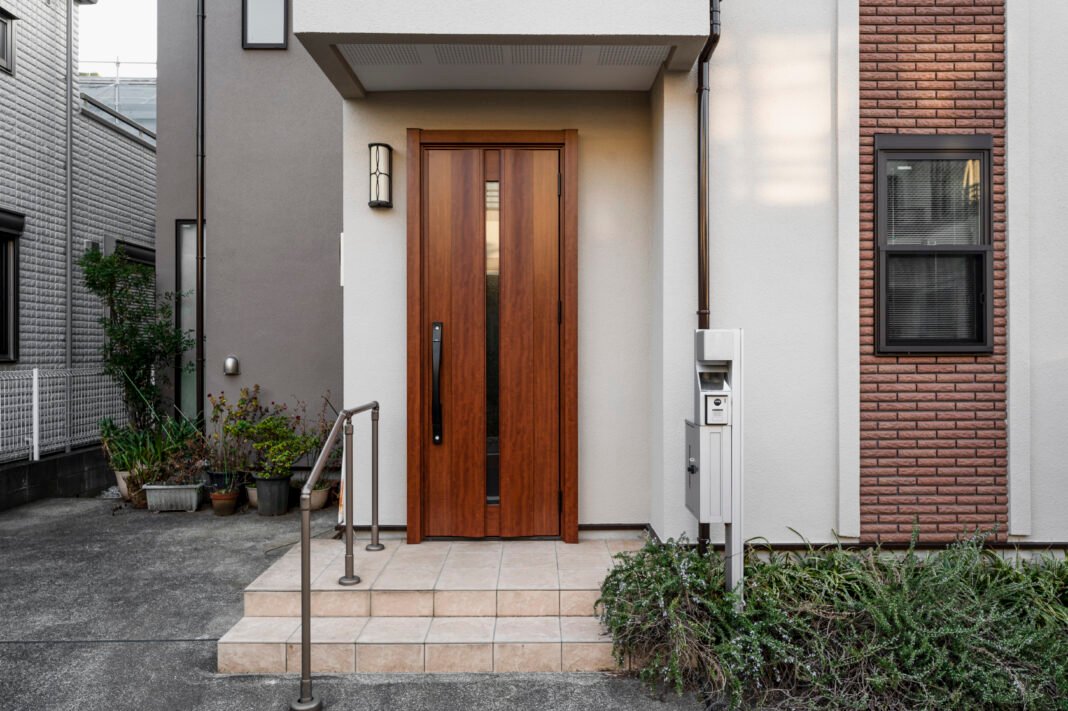
For most of the last century, replacing a front door was treated as a maintenance task. The old one warped. The deadbolt stopped catching. The weatherstripping gave out after a hard winter. You replaced it, matched the color as closely as possible, and moved on.
That thinking has shifted considerably. Across the country, homeowners are approaching the front door differently. Treating it less as a functional component and more as an intentional design statement that shapes how a home is perceived from the moment someone pulls into the driveway.
The data supports the shift. According to Rocket Mortgage, a new steel entry door delivers an average return on investment of 188 percent, making it one of the highest-performing home improvement projects by any financial measure.
That figure is not lost on buyers, sellers, or the design-minded homeowners who simply want their home to look the way they feel it should.
What Makes a Front Door “Custom” and Is It Worth the Difference?
The word ‘custom’ is used loosely in home improvement. In the context of entry doors, it has a specific meaning that is worth understanding before committing to a project.
A standard door is manufactured to common dimensions, typically 36 inches wide by 80 inches tall, in a limited range of panel configurations and finishes. It comes off a production line and is designed to fit the broadest possible range of openings.
A custom front door Arvada CO is built to specification. That means the dimensions can be tailored to a non-standard opening, the panel layout can be designed to align with the architectural rhythm of the facade, the glass configuration can be selected for a specific effect, and the finish can be matched to a precise color rather than a catalog option.
For a home with a distinctive roofline, an oversized entry, or a strong architectural identity, a custom door does something a standard replacement cannot: it looks like it belongs. That cohesion is subtle but immediately felt by anyone who approaches the home.
What Materials Are Available for Custom Entry Doors?
Material selection is one of the most consequential decisions in a custom door project. It affects the door’s appearance, maintenance requirements, performance in the local climate, and long-term durability.
The four primary options each have distinct characteristics:
Wood is the traditional choice for custom work and remains the most architecturally expressive option. It can be carved, shaped, and finished in ways no other material can match. The tradeoff is maintenance. Wood doors require periodic refinishing and are sensitive to moisture cycling, which is a real consideration in climates with significant seasonal swings.
Fiberglass has closed much of the gap with wood in terms of appearance, with modern composite doors offering convincing wood-grain textures that can be stained and finished. The advantage is performance: fiberglass resists warping, swelling, and dimensional changes associated with temperature extremes. It is a strong choice for climates where a wood door would require more upkeep than most homeowners want to commit to.
Steel is the material of choice when security and insulation are the primary concerns. It is the most dimensionally stable option and typically offers superior energy efficiency to wood of comparable thickness. The limitation is customization: steel does not lend itself to the same level of sculptural detail as wood can, though panel configurations and glass options offer meaningful design flexibility.
Iron and aluminum occupy a different category, used most often for statement entryways where weight, mass, and visual presence are part of the design intent. Custom iron doors in particular have become closely associated with high-end residential architecture in the Southwest and Mountain West, where the material’s warmth and durability align well with both the aesthetic and the climate.
This Old House offers a detailed breakdown of how these materials compare in real-world performance, which is worth reading before finalizing any door specification: Front Door Replacement Options — This Old House
How Does a Custom Front Door Affect a Home’s Curb Appeal?
Curb appeal is a phrase that gets used so often it has started to lose meaning. What it actually describes is the way a home registers in the first few seconds of perception, before anyone has opened a door, read a listing, or walked inside.
The entry is the face of that perception. It is where the eye lands, where scale is established, and where the relationship between the home and the person approaching it is first communicated. A door that is proportioned correctly, finished thoughtfully, and designed to reflect the character of the surrounding architecture does this work quietly and effectively.
A door that does not fit, whether because the scale is wrong, the material looks out of place, or the color reads as an afterthought, creates a friction that takes the rest of the home longer to overcome.
This is where custom work earns its cost. The difference between a door that fits and one that belongs is not always obvious in a catalog photograph. It becomes clear when you stand in front of the house.
What Role Does Hardware Play in a Custom Door Project?
Hardware is to a custom door what jewelry is to a considered outfit. It can elevate the whole or undermine it entirely.
The most common mistake is treating hardware as a final step rather than an integral part of the design. Door pulls, hinges, locksets, and knockers all contribute to the visual weight and character of the entry, and they need to be selected in relation to the door’s panel configuration, finish, and the home’s architectural style.
Scale matters here more than most people expect. An oversized pivot pull on a door with delicate glass lites reads as a mismatch. An understated lever handle on a heavy plank door with iron-style clavos undersells the whole composition.
Finishes should relate to the broader hardware language of the home’s exterior, including light fixtures, house numbers, and garage door hardware. When everything speaks the same material language, the entry reads as a cohesive design decision rather than a collection of individual purchases.
What Are the Signs That a Front Door Needs to Be Replaced Rather Than Repaired?
Not every door warrants full replacement. Some can be refinished, re-weatherstripped, or have hardware updated to extend their useful life. But there are clear signals that a door has reached the end of its serviceable period.
Structural failure. A door that no longer sits squarely in its frame, that drags on the threshold, or that has visible separation between the stile and panel is failing structurally. These issues do not improve with minor repairs.
Compromised insulation. If the door surface is cold to the touch in winter or warm in summer, regardless of exterior conditions, the insulating core has likely failed or was never adequate for the climate. Energy loss through an exterior door compounds significantly over a heating season.
Finish that cannot be restored. Wood doors that have experienced deep moisture infiltration, cracking at the core, or delamination at the panels are beyond refinishing. The damage has moved from surface to the substrate.
Security concerns. A door whose frame has softened around the lock area, whose jamb shows signs of previous forced entry, or whose hardware can no longer be adjusted to operate correctly poses a security risk that cosmetic work cannot address.
How Should You Choose a Contractor for a Custom Door Installation?
The quality of a custom door is only realized through competent installation. A door that is poorly set, inadequately shimmed, or improperly flashed will fail regardless of what it cost to fabricate.
For a custom entry door installation, the key qualifications to look for are direct experience with the specific door type and material, a demonstrated understanding of proper flashing and water management at the threshold, and the patience that fine finish work demands. This is not a project where speed should be prioritized over precision.
Ask to see completed installations, ideally in person or through detailed photography. Ask specifically whether the contractor handles finish work themselves or subs it out. And ask about their process for adjusting the door after installation, because virtually all custom wood and iron doors require a period of adjustment as they settle into the opening and the structure around them shifts with seasonal temperature changes.
In Colorado’s northern Front Range, where temperature swings between seasons are significant and UV exposure at elevation accelerates finish degradation, installers familiar with those specific conditions bring value that a general contractor without regional experience cannot replicate. Homeowners looking for a custom front door Arvada CO professionals have worked on in comparable mountain-adjacent climates are often the best starting point for a reliable referral.
What Should the Selection Process Look Like?
A custom door project done well is not a quick transaction. It involves a sequence of decisions that build on each other, and rushing any step tends to compromise the result.
A reasonable process looks something like this: Start with the architecture. Identify the style vocabulary of the home, its proportions, the materials already in play on the facade, and the effect you want the entry to create. From there, the material choice becomes clearer. Once material is settled, the door configuration, panel layout, glass options, and hardware can be explored together as a system rather than as individual choices.
Get a physical sample of any finish before committing. Colors read differently in natural light, in shade, and against the specific palette of your home’s exterior. What looks right on a chip or a screen can be surprising when it is standing in the opening at scale.
Build in time. Custom fabrication takes longer than standard lead times, and installation on a quality custom door deserves more scheduling consideration than a standard swap. The result, when the process is given the time it requires, is an entry that reads as though it was always there.
A Note on Timing
There is no universally right time to replace a front door. But there are several moments when the decision becomes obvious: before a significant renovation that will change the home’s exterior character, before a listing when first impressions carry direct financial weight, or simply when the door that is there no longer represents the home behind it.
Any of those is a reasonable place to start.