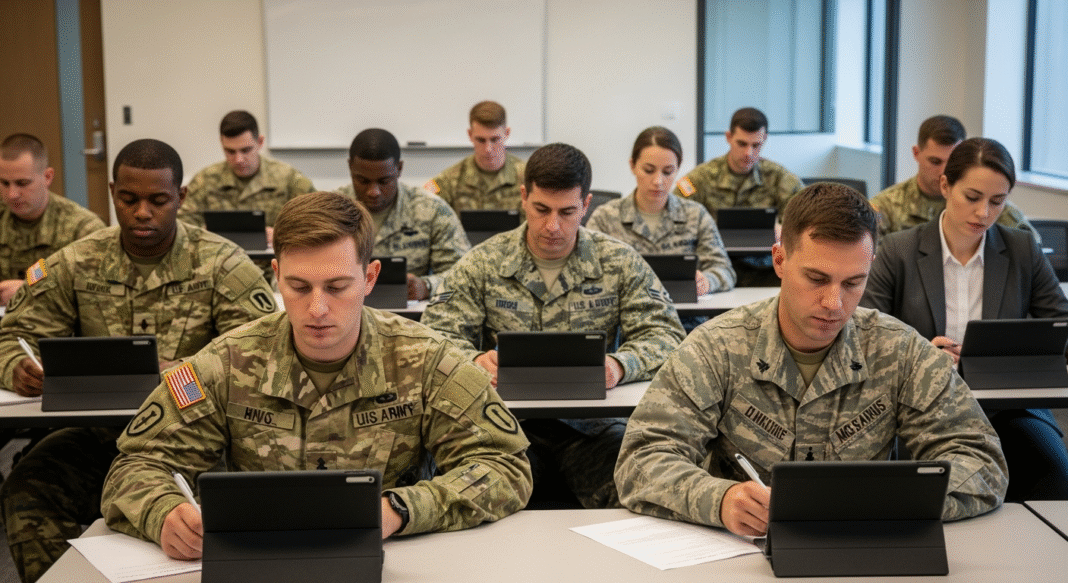
Anyone in the armed forces, or thinking about joining up, learns pretty quickly that your career path isn’t just about showing up. It’s structured. Very, very structured, actually. And a massive part of that setup? Standardized testing. Some folks grumble about it, sure. Who genuinely loves tests, right? But the thing is, these assessments aren’t going anywhere. They’re a core, unavoidable piece of how individuals get placed, how they specialize, and ultimately, how they move up the ranks. You wanna make a real impact, or just secure a better future? Your test scores play a much bigger role than you might imagine. That’s just how it is in 2026.
The Foundation: Entry and Specialization
It all kicks off the moment you consider enlisting, with the ASVAB – the Armed Services Vocational Aptitude Battery. This isn’t just a hoop to jump through; it’s a deep-dive tool, really. Your scores here don’t just decide if you get in, but *where* you get in. Want to fly jets? You need a specific score. Aiming for signals intelligence? Totally different set of requirements. The ASVAB pretty much dictates your initial Military Occupational Specialty (MOS), Air Force Specialty Code (AFSC), or Navy Rating. Miss the mark on certain sections, and doors to some of the more technical or specialized jobs just won’t swing open. That’s it. So, right from the jump, a test is mapping out a huge chunk of your professional trajectory. And it’s not just about raw smarts. It’s about showing you grasp the basics in areas like arithmetic reasoning, word knowledge, and mechanical comprehension — skills the military considers pretty important for various roles. It makes total sense, when you think about it. You can’t just *say* you’re good with engines; you have to prove you understand how they work.
Language Skills: A Force Multiplier
Then we hit the specialized tests, especially for languages. Look, in a world that’s always connected and often unpredictable, being bilingual isn’t just a bonus for military folks; it’s a real strategic advantage. Tests like the Defense Language Aptitude Battery (DLAB) and the ALCPT Practice Test are the gatekeepers here. The DLAB checks your natural talent for picking up a foreign language. The ALCPT (American Language Course Placement Test), on the other hand, actually measures your English skills, often for non-native speakers, or sometimes for gauging readiness for advanced language training. But it isn’t just the ALCPT. There’s also the DLPT, the Defense Language Proficiency Test, which tests your actual foreign language ability. Scoring high on these can open up some truly unique career paths – think cryptologic linguist, foreign area officer, or working in attaché offices overseas. These jobs often come with solid Foreign Language Proficiency Pay (FLPP), too, which isn’t a bad deal at all. The Defense Language Institute Foreign Language Center, or DLIFLC, handles much of this testing, setting the standards for what counts as truly fluent. Their website, DLIFLC, spells out the details for these key assessments. Honestly, what I’ve noticed is that developing a second language and proving it through these tests can genuinely reshape a military career. It’s a force multiplier, no question.
Promotion and Performance: Staying Ahead
It doesn’t stop with entry or specialization. Not even close. As you move through your service, pushing for those next stripes or bars, you’ll run into more standardized tests. Promotion boards, for instance, often factor in scores from various written exams covering leadership ideas, military history, and technical stuff specific to your branch and rank. These aren’t just easy pop quizzes; they’re in-depth evaluations designed to see if you have the smarts and basic knowledge to lead others effectively. You’ve also got the constant grind of physical fitness tests (PFTs). These aren’t just about keeping fit for the sake of it; they’re directly tied to your eligibility for promotion, special assignments, and even staying in the service. Fail too many, and your career pretty much stalls. Period. So, while leadership experience and real-world performance are important, the military relies on actual, measurable scores to ensure that everyone promoted is physically and psychologically prepared for greater duties. It is a check, correct? A way to keep everyone sharp and ready for whatever comes next.
Beyond the Score: What Tests Really Measure
Now, nobody’s arguing that standardized tests are perfect. They’ve definitely got their hang-ups, like any system. But what they do incredibly well is give us an objective starting point. They let the military evaluate a massive pool of candidates and personnel fairly, cutting down on bias in initial placements and promotion choices. It’s tough to argue with a number on a test, after all. These tests help pick for critical thinking, specific field knowledge, and, in a way, self-discipline. Showing up prepared, hitting the books hard, and doing well really indicates a commitment to self-improvement and readiness — traits any military organization holds in high regard. It tells them you take the opportunities seriously, that you’re willing to put in the effort. The military runs on a system of proven capability, because frankly, lives and national security often hang in the balance. These tests, despite the occasional headaches they cause, are one of the most consistent ways to gauge that capability across the board. We might not love taking them, but they’re a necessary tool for ensuring the right people are in the right places, ready to do the job.