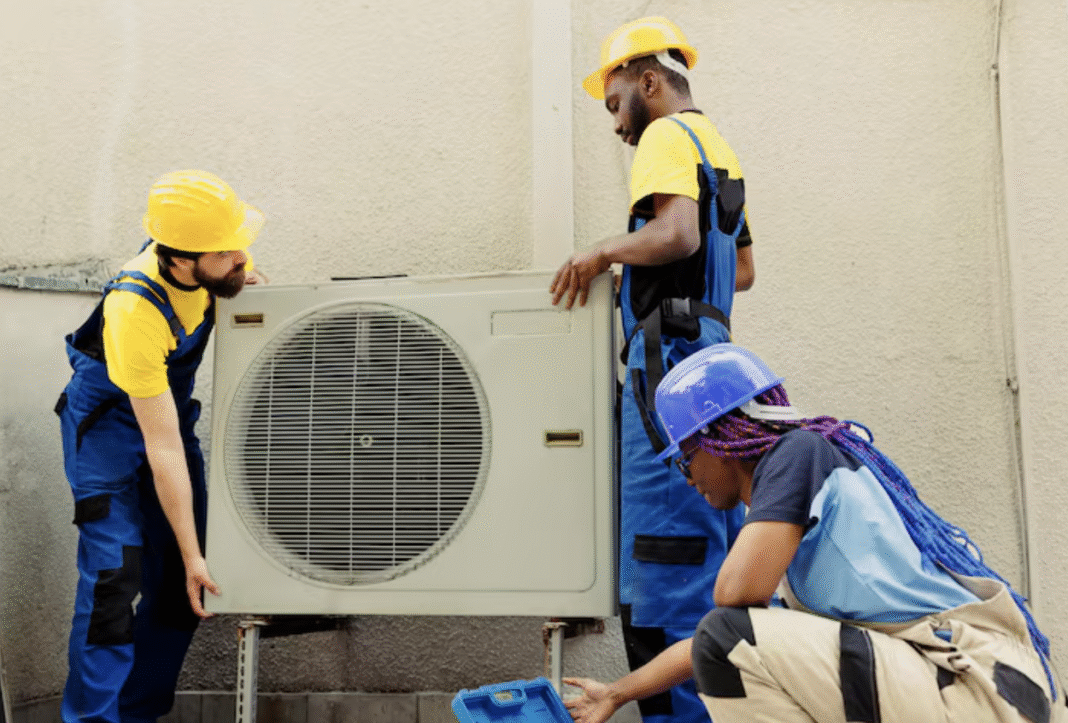
Your air conditioner works quietly in the background for months at a time, and it is easy to forget it exists until the moment it stops working. By then, a small problem has often turned into an expensive one. Knowing the warning signs, understanding what goes wrong inside your system, and knowing when to call a professional can save you hundreds of dollars and a lot of miserable summer days.
Air conditioning is not a luxury most homeowners can skip. According to the U.S. Energy Information Administration, 88% of U.S. households rely on air conditioning, making it one of the most essential systems in any home.
Why Air Conditioners Break Down in the First Place
An air conditioner is not a simple machine. It is a closed-loop refrigeration system with electrical components, mechanical parts, a refrigerant circuit, and a drainage system all working together simultaneously. When any one of these systems is stressed, it tends to push strain onto the others.
The most common reason units fail is deferred maintenance. Dirty filters restrict airflow, which forces the blower motor and compressor to work harder. Over time that extra strain causes parts to wear out faster than they should. Refrigerant leaks, which often develop slowly at coil joints and fittings, go unnoticed until cooling performance drops noticeably. Electrical components like capacitors and contactors have a finite lifespan and tend to fail without much warning, especially in older systems.
Heat also plays a role. Air conditioners are designed to operate within a certain ambient temperature range. On days when outdoor temperatures climb into the upper 90s or above, the system runs almost continuously, generating more heat within its own components than it was designed to handle for extended periods.
What Are the Most Common Air Conditioner Problems?
Understanding what is most likely to go wrong helps you recognize symptoms early and have an informed conversation with a technician.
Refrigerant Issues Refrigerant is the substance that absorbs heat from inside your home and releases it outside. Your system is a sealed circuit, which means refrigerant does not get “used up” under normal conditions. If your unit is low on refrigerant, it means there is a leak somewhere. Common symptoms include ice forming on the refrigerant lines, the system running constantly without adequately cooling the space, and a hissing or bubbling sound near the unit. A licensed technician must handle refrigerant by law because it requires EPA certification to purchase and handle.
Capacitor Failure Capacitors are small cylindrical components that store and release electrical energy to start and run the compressor and fan motors. They are one of the most frequently replaced parts in a residential AC system. When a capacitor begins to fail, you may notice the system struggling to start, the fan spinning slowly, or the unit humming but not cooling. Capacitors are relatively inexpensive to replace but can cause significant damage to motors if left unaddressed.
Dirty or Frozen Evaporator Coil The evaporator coil sits inside the air handler and absorbs heat from the air inside your home. When airflow is restricted, usually from a dirty filter or blocked return vent, the coil can drop below freezing and ice over. A frozen coil completely stops cooling. The fix usually involves letting the unit thaw, replacing the filter, and identifying the underlying cause of the airflow restriction. If the coil itself is dirty, professional cleaning is needed.
Drainage Problems As your AC removes humidity from the air, it produces condensation that drains through a condensate line. This line can develop clogs from algae, mold, and debris over time. A clogged line causes water to back up into the drain pan and eventually overflow. You might notice water near the indoor unit, increased indoor humidity, or a musty smell. Most clogs can be cleared with a wet/dry vacuum or a flush of diluted bleach, but recurring clogs usually point to a drainage system that needs professional attention.
Compressor Problems The compressor is the heart of the system and the most expensive component to repair or replace. It pressurizes the refrigerant and drives the entire cooling cycle. Compressor failure is often the result of years of accumulated stress, including low refrigerant levels, electrical problems, and overheating. When a compressor fails on an older system, replacement of the entire outdoor unit is often the more practical financial decision.
How to Tell When Your AC Needs Professional Repair
Some signs are easy to dismiss or explain away, but a few specific symptoms are reliable indicators that a technician needs to evaluate your system.
Warm air blowing from the vents when the system is running is the most obvious sign. Before calling for service, confirm the thermostat is set to cool and the temperature is set below the current room temperature. If both are correct and the air is still warm, the problem is mechanical.
Unusual sounds are another reliable red flag. A healthy air conditioner runs with a steady, relatively quiet hum. Banging, grinding, squealing, or clanking sounds all indicate mechanical issues. Banging typically points to a loose or broken component inside the compressor. Squealing often means a belt or bearing is failing. Grinding usually indicates motor bearings wearing out. None of these sounds resolve on their own.
Short cycling, where the system turns on and off repeatedly in short intervals without completing a full cooling cycle, puts significant stress on the compressor. It can be caused by an oversized unit, a refrigerant leak, a dirty evaporator coil, or electrical problems. Short cycling is worth diagnosing promptly because every start-up cycle puts extra strain on the compressor.
Finally, a sharp or persistent increase in your electric bill during months when your usage habits have not changed is often a sign the system is working harder than it should to maintain temperature.
Repair or Replace: How to Decide
This is the question most homeowners eventually face, and the answer depends on the age of the unit, the cost of the repair, and the overall condition of the system.
A widely used rule of thumb in the HVAC industry is the 5,000 rule: multiply the estimated repair cost by the age of the unit in years. If the result exceeds $5,000, replacement tends to make more financial sense. For example, a 14-year-old unit needing an $800 repair produces a score of $11,200, which clearly favors replacement. A 3-year-old unit needing the same $800 repair produces $2,400, which favors repair.
Age matters independently as well. Most residential central air conditioning systems have a lifespan of 15 to 20 years with proper maintenance. If a unit is approaching or beyond that range, investing in major repairs means spending significant money on a system that may fail within a few years regardless. Newer systems are also considerably more energy-efficient, which means a replacement can reduce monthly utility costs enough to offset a portion of the purchase price over time.
One situation where replacement is almost always the right call is when the compressor fails on a unit that is more than 10 years old. Compressor replacement on an older unit is expensive, carries no guarantee of how long the rest of the system will hold up, and often makes less sense than putting that money toward a newer, more efficient system.
What Happens During an AC Repair Service Call
Knowing what to expect helps you ask better questions and evaluate whether a contractor is doing their job thoroughly.
A technician will typically start by reviewing the symptoms you describe and then conduct a visual inspection of both the indoor and outdoor units. They will check refrigerant pressure, inspect electrical connections, test capacitors and contactors, check the condensate drain, and measure the temperature differential between the supply and return air. On a properly functioning system, the supply air should be roughly 15 to 20 degrees cooler than the return air. A smaller difference indicates reduced cooling capacity.
After diagnosis, a reputable technician will explain what they found, what the repair involves, and what it will cost before doing any work. Be cautious of companies that perform repairs before discussing pricing or that present a list of recommended work without explaining why each item is needed.
How to Find a Qualified AC Repair Technician
Credentials are the first filter. Any technician working with refrigerants is legally required to hold EPA Section 608 certification. For broader HVAC competence, look for NATE certification, which stands for North American Technician Excellence and requires passing a rigorous technical exam. These certifications are not difficult to verify. You can ask to see them directly or check the technician’s company profile.
Beyond credentials, look for companies that have been operating locally for several years, carry liability insurance, and can provide references from customers in your area. Online reviews are useful, but pay more attention to how a company responds to negative reviews than to the overall star rating.
Homeowners searching for Air Conditioner Repair Thornton CO should know that the local climate adds some specific demands to any HVAC system. Thornton sits at roughly 5,400 feet in elevation and experiences significant temperature swings, dry air, and intense UV exposure. These conditions accelerate wear on outdoor unit components and can affect refrigerant pressure readings differently than at sea level. A contractor familiar with Front Range conditions will know how to account for altitude in their diagnostic process and will be equipped for the region’s specific seasonal demands.
Simple Maintenance That Prevents Most Repairs
Most AC repairs are preventable with consistent basic maintenance. Replacing the air filter every one to three months is the single highest-impact thing a homeowner can do. A clogged filter is the root cause of a surprising number of service calls. During the cooling season, check the filter monthly.
Keep the area around the outdoor condenser clear. The unit needs adequate airflow to release heat. Grass, shrubs, fencing, and stored items placed too close to the unit restrict that airflow and reduce efficiency. A clearance of at least two feet on all sides is a reasonable general guideline.
Have the system professionally inspected once a year, ideally in the spring before cooling season begins. A technician will clean the coils, check refrigerant levels, test electrical components, and clear the condensate drain. Catching a failing capacitor during a routine inspection costs a fraction of what it costs when the capacitor fails during a heat wave and takes the entire system down with it.
Conclusion
An air conditioner that is well-maintained and caught early when problems develop will last longer, run more efficiently, and cost significantly less to own over its lifetime. The warning signs are rarely subtle if you know what to look for. Unusual sounds, warm air, short cycling, and rising energy bills are all worth paying attention to.
When it is time to call a professional, choose based on credentials and local reputation rather than price alone. The cheapest repair today can become the most expensive one if it is done wrong.