There was a time when building a prototype meant weeks of waiting, thousands of dollars in machining costs, and a finished model that still might not be right. A single design flaw discovered late in that process could erase months of work. For engineers, product designers, and small business owners, that reality made iteration slow, expensive, and discouraging.
3D print prototyping changed that equation dramatically. What once took weeks now takes hours. What once required specialized tooling can now be done from a desktop or outsourced to a local service with a quick file upload. The technology has grown from a niche industrial tool into a mainstream part of how products are designed, tested, and brought to market.
According to Grand View Research, the global 3D printing market was valued at $30.55 billion in 2025 and is projected to reach $168.93 billion by 2033, with prototyping remaining one of the dominant applications driving that growth.
Understanding how the process works, what it can and cannot do, and when to use it helps you make smarter decisions at every stage of a product’s development.
What Is 3D Print Prototyping?
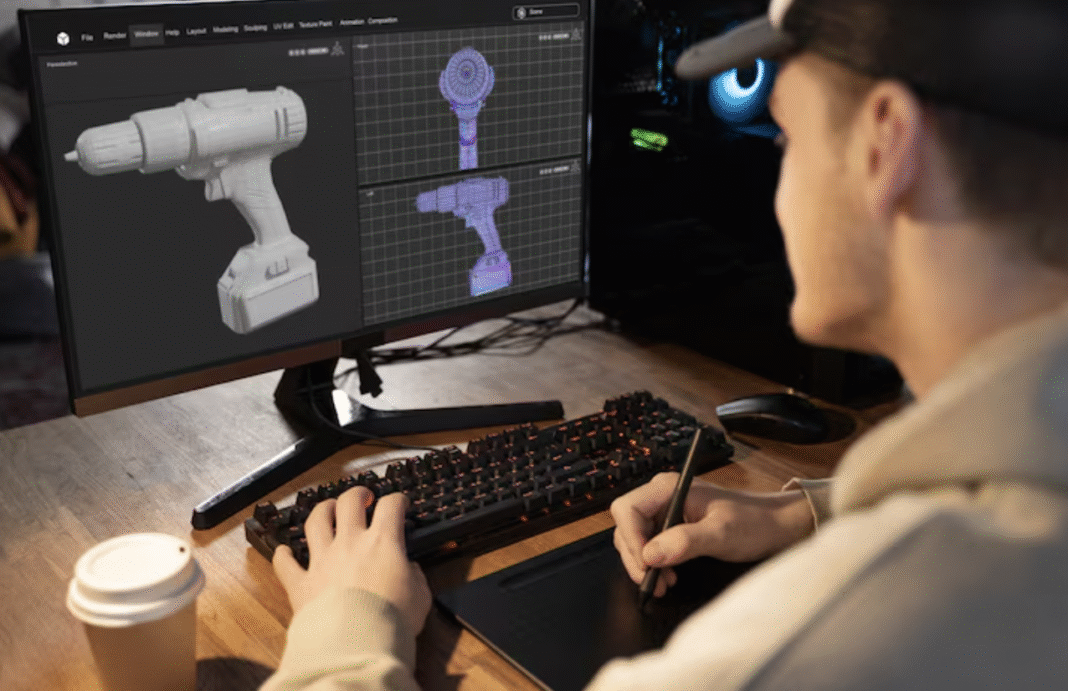
At its core, 3D print prototyping is the process of using additive manufacturing technology to produce a physical model of a design before committing to full production. The model is built layer by layer from a digital file, typically created in CAD (computer-aided design) software. Each layer is deposited, cured, or fused depending on the printing method until the complete three-dimensional object is formed.
The term “rapid prototyping” is often used interchangeably with 3D print prototyping, though technically rapid prototyping refers to the broader practice of quickly producing physical models, of which 3D printing is the most common method today. The goal in both cases is the same: to create something tangible that can be held, examined, tested, and improved before the expensive work of final manufacturing begins.
The Different Types of 3D Printing Technologies
Not all 3D printers work the same way, and the technology used has a significant effect on the quality, material options, and cost of a prototype. Here are the methods most commonly used in prototyping:
Fused Deposition Modeling (FDM) is the most widely available and most affordable method. A thermoplastic filament is melted and extruded layer by layer onto a build platform. FDM is ideal for concept models and early-stage prototypes where precision is less critical. It is widely available through both desktop printers and professional service bureaus.
Stereolithography (SLA) uses a UV laser to cure liquid resin into solid layers. It produces smoother surfaces and finer details than FDM, making it a popular choice for parts that need to be visually evaluated or functionally tested with tighter tolerances. SLA is common in product design, dental, and medical applications.
Selective Laser Sintering (SLS) uses a laser to fuse powdered nylon or other materials into solid layers. Unlike FDM and SLA, SLS does not require support structures, which allows for more complex geometries. The resulting parts are durable and can often be used for functional testing in near-production conditions.
Direct Metal Laser Sintering (DMLS) applies a similar process using metal powder, producing parts with mechanical properties close to those of machined components. This method is used in aerospace, automotive, and industrial applications where the prototype must perform under real operating conditions.
PolyJet and MultiJet Printing deposit photopolymer droplets that are cured with UV light, similar to inkjet printing. These methods can produce parts with multiple materials and shore hardnesses in a single build, making them useful for overmolds, soft-touch components, and high-fidelity visual models.
Each method has its strengths, and the right choice depends on what you need the prototype to do. A concept model meant to show investors what a product looks like has very different requirements than a functional prototype that will be tested under load.
Why Iteration Is the Real Value
The practical advantage of 3D print prototyping is not just speed, though speed matters. The deeper value is what speed makes possible: iteration. When a prototype takes three weeks and costs $2,000, a design team might go through two or three rounds of refinement before finalizing. When a prototype takes two days and costs $80, that same team might run ten iterations, each one progressively better than the last.
More iteration leads to better products. Design flaws get caught earlier, when they are still inexpensive to fix. Ergonomic issues, fit problems, and assembly conflicts show up in the physical model in ways that digital renders often miss. Real parts reveal things that screens do not.
This iterative process also changes team dynamics. When a physical model is accessible quickly, engineers, marketers, and stakeholders can all engage with the design at the same time rather than waiting for a sequential review. Feedback becomes immediate, decisions get made faster, and the development cycle compresses without quality being sacrificed.
What Materials Can Be Used in 3D Print Prototyping?
Material selection is one of the most important decisions in any prototyping project. The material affects surface finish, mechanical properties, heat resistance, flexibility, and how closely the prototype simulates the final production part.
Common materials include PLA and ABS thermoplastics for standard FDM printing. PLA is easy to print and suitable for visual models. ABS is tougher and more heat-resistant, making it better for functional parts. PETG offers a balance between the two, with good strength and moderate temperature resistance.
Nylon is widely used in SLS prototyping because of its durability and flexibility. Resins used in SLA and DLP printing come in a wide range of formulations, from standard visual-grade resins to engineering resins that simulate polypropylene or ABS, castable resins for jewelry, and biocompatible resins used in medical applications.
For metal prototyping, common materials include stainless steel, titanium, aluminum, and Inconel. These produce functional parts that can be tested under real operating conditions, though metal 3D printing is significantly more expensive than polymer methods and is typically reserved for later-stage prototypes or production parts.
The Difference Between a Concept Model, Functional Prototype, and Production Prototype
These three terms get used loosely, but they describe meaningfully different stages of development, each with different requirements.
A concept model is a physical representation of what a product will look like. It is typically not functional. Its purpose is to communicate the design intent to stakeholders, gather visual feedback, and evaluate aesthetics and proportions. Concept models are usually printed quickly and inexpensively in a visual-grade material. Accuracy to final appearance matters more than mechanical performance.
A functional prototype is built to test how something works, not just how it looks. It may need to snap, flex, compress, withstand heat, or carry a load. Material choice becomes critical at this stage because the prototype needs to behave the way the final product will behave, or close enough to identify real-world performance issues.
A production prototype, sometimes called a pre-production or pilot build prototype, is as close to the final product as possible before full manufacturing begins. It may be printed in production-equivalent materials or even produced through the actual intended manufacturing method in small quantities. The goal is to validate that the design is manufacturable, that tolerances are met, and that the product performs exactly as intended before tooling investment is made.
How to Work with a 3D Printing Service
For companies and individuals who do not own industrial printers, outsourcing to a professional 3D printing service is often the most practical approach. The process is typically straightforward: you upload a CAD file in a compatible format (most commonly STL or STEP), select a material and printing technology, and receive a quote based on part volume, material, and finish requirements.
Before submitting a file, it is worth reviewing the design for printability. Wall thicknesses that are too thin may fail during printing. Overhanging features may require support structures that affect surface finish. Small holes may not print cleanly depending on the resolution of the printer being used. Most professional services will review files before printing and flag issues before they become problems, but understanding the basics helps you design more effectively from the start.
Turnaround times at professional services vary from same-day for simple FDM parts to several weeks for complex metal builds. Lead times depend on part complexity, material, post-processing requirements, and current demand at the facility.
For businesses in northern Colorado looking to move a product from concept to physical form, working with a 3d Print Prototyping Denver CO makes practical sense. Denver has a growing manufacturing and technology sector with access to a range of industrial printing technologies and engineering expertise. Proximity to a service provider shortens feedback loops, simplifies file handoffs, and makes in-person design reviews possible, which is particularly valuable during early-stage development when frequent changes are likely.
When 3D Printing Is Not the Right Tool
3D print prototyping is a powerful method, but it is not always the best choice for every situation. Understanding its limitations prevents costly missteps.
Very large parts can become expensive to print and may exceed the build volume of available machines, requiring the part to be split and bonded. Highly transparent components are difficult to achieve with most printing methods, though some SLA resins can be polished to near-optical clarity. Parts that require the exact material properties of a specific injection-molded resin may not be accurately simulated through additive methods, which matters when mechanical testing results need to be directly translatable to production.
In cases where the final product will be injection-molded in high volumes, there is a point in the development process where bridge tooling or soft tooling in the actual production material becomes more useful than continued 3D printing. That transition point is part of a thoughtful development strategy rather than a sign that 3D printing failed.
Conclusion
3D print prototyping has made product development faster, more iterative, and more accessible than at any point in manufacturing history. Whether you are developing a consumer product, an industrial component, a medical device, or an architectural model, the ability to hold your idea in your hands within hours of designing it changes how you think, collaborate, and refine.
The key is understanding what each printing technology is good for, what materials suit your testing requirements, and how to structure your prototyping process so that each iteration builds meaningfully on the last. When that foundation is in place, the technology delivers exactly what it promises: less time between idea and reality.