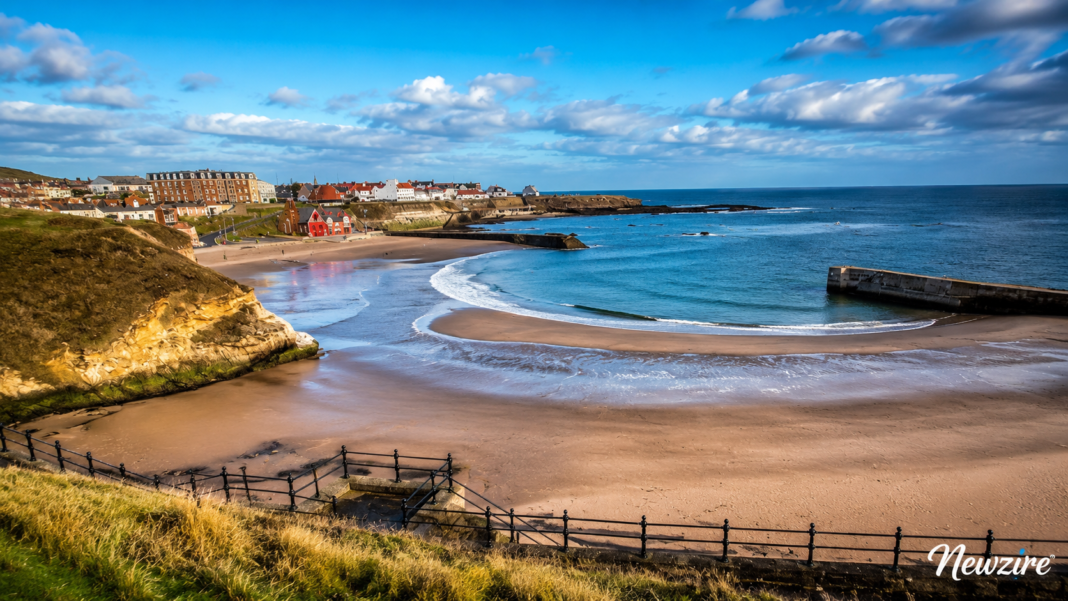
In 2025, emergency services at Cullercoats Bay responded to sixty-nine incidents, the highest figure in the station’s 173-year history. The previous record was forty-five, set the year before. Every crew member who answered those calls was an unpaid volunteer.
The call-outs included a mass water rescue involving thirty-two people caught in force five offshore winds, two cliff falls that brought air ambulance attendance, a couple found half a mile out in a sinking inflatable, and a medical emergency on a tidal island with no land access. The rescues continued into 2026.
Table of Contents
Thirty-Two People in the Water: 24 June 2025
HM Coastguard received the call at about 12:20 BST on 24 June 2025. Reports were coming in of thirty-two children and adults in difficulty off Cullercoats Bay. A group had been kayaking and paddleboarding when force five offshore winds pushed them away from shore. They could not paddle back.
Cullercoats RNLI reached the scene first. Tynemouth RNLI followed. RNLI lifeguards, the Tynemouth Volunteer Life Brigade, Northumbria Police, and Blyth Coastguard Rescue Team all responded. HM Coastguard contacted passing vessels in the area; two commercial ships moved in closer to help recover abandoned kayaks once all thirty-two people had been accounted for.
Fourteen had made it back to shore on their own before the lifeboats arrived. The remaining eighteen, thirteen of them children, were pulled from the water by RNLI and lifeguard crews. One child was taken to hospital as a precaution. All thirty-two survived.
| Detail | Information |
|---|---|
| Date | 24 June 2025 |
| People reported in difficulty | 32 |
| Rescued from the water | 18 (13 children, 5 adults) |
| Reached shore independently | 14 |
| Agencies responded | 6, plus 2 commercial vessels |
| Hospital admissions | 1 child (precautionary) |
Sam Clow, coxswain at Tynemouth RNLI, said:
“The tasking we got was to thirty-two children and adults who had been caught unawares by the wind and were being blown offshore. We worked together with Cullercoats RNLI, who arrived at the scene before us, RNLI lifeguards and others, and brought them all back safely. Every child we got to had an adult with them and, when we debriefed with them afterwards, we heard that they had done everything correctly when they became aware of the difficulties they were in.”
RNLI lifeguard George Legg, who was on scene, described it as “an intense situation with force five winds blowing outside the harbour creating lots of wind chop.” The RNLI released bodycam footage of the operation the following day.
April 2026: Trapped by the Tide at St Mary’s Island
On 18 April 2026, Cullercoats RNLI was called at 2:37pm after a person fell seriously ill on St Mary’s Island, near Whitley Bay. The causeway connecting the island to the mainland had flooded with the incoming tide. There was no way off by land.
The crew used a technique called veering, holding the lifeboat steady with its anchor while backing the vessel toward the rocky shoreline. Two crew members entered the water, climbed the rocks with first aid equipment, and reached the patient. When their condition worsened, the crew and two members of St Mary’s Island Wildlife Conservation Society stretchered them to the lifeboat and brought them back to Cullercoats Harbour.
North East Ambulance Service was waiting. The patient was treated at the harbour and discharged at the scene. Seven members of the Tynemouth Volunteer Life Brigade stood by at the station throughout.
An RNLI crew member said:
“It was a challenging service call that called upon many aspects of our training, including seamanship and casualty care in order to look after the casualty and ensure they received the best possible care. If you are visiting the island to witness the incredible wildlife on our coast, please remember to check the tide times for safe periods to cross the causeway.”
Cliff Falls and a Couple Lost at Sea
In August 2025, a person fell from the cliffs at Cullercoats. North East Ambulance Service was called at 4:21pm and sent a duty officer, a double-crewed ambulance, three Hazardous Area Response Team vehicles, and a specialist paramedic. Great North Air Ambulance Service attended in support. The patient was taken to the Royal Victoria Infirmary by road with a doctor on board.
Earlier in 2025, Cullercoats RNLI found a couple half a mile out from Cullercoats Bay at about 2pm on a Tuesday, in an inflatable dinghy with two snapped oars. Both were wearing only shorts and had no safety equipment. A station spokeswoman said both were “suffering from extreme cold and shock” when reached, and that “with the speed the dinghy was becoming unseaworthy, the casualties only had a matter of minutes before entering the water.” They had survived because they had a phone.
In March 2022, Great North Air Ambulance Service was called to Cullercoats Bay after a thirteen-year-old boy fell approximately twenty feet from a cliff and suffered serious head and leg injuries. A doctor-led trauma team administered a blood transfusion at the scene.
The 2025 Record in Full
The station reached twenty call-outs by early May 2025 and forty-one by late July. The 60th came on the evening of 20 October: a report of someone heard calling for help from the rocks on the south side of the bay. The crew launched, searched the water and the shoreline, and found nothing. It was a hoax.
Crew member Sarah Whitelaw said: “We rarely receive hoax calls, thankfully. It’s more often that we get a false alarm with good intent. We always encourage anyone who thinks they’ve seen something to call the Coastguard.”
There were nine more call-outs after that. The station finished 2025 on sixty-nine, more than fifty per cent above the previous annual record.
Carl Taylor, thirty-eight, runs a plastering business in Cullercoats. He qualified as a lifeboat helm on 15 January 2025 and was involved in fifty-eight of the sixty-nine call-outs that year, helming the vessel on twenty-three of them. He was not paid for any of it.
Operations Manager Kay Heslop said:
“This year, the busiest on record, has challenged the crew both in terms of the commitment of their time and also through the varied taskings we have received. I could not be more proud of what they, as volunteers, have consistently delivered throughout the year.”
The Services Behind Each Rescue
Cullercoats RNLI operates the Atlantic 85 inshore lifeboat Daddy’s Girl from Cullercoats Harbour. The station has launched more than 720 times since opening in 1852 and has saved over 840 lives.
The Tynemouth Volunteer Life Brigade has worked this stretch of coastline since 5 December 1864. The Brigade was founded weeks after two ships, the SS Stanley and the schooner Friendship, ran onto the Black Middens rocks off Tynemouth on 24 November 1864, killing thirty-two people. The disaster unfolded within sight of the shore, watched by hundreds who had no way to help. It is the world’s first voluntary shore-based coastal rescue service and one of only three remaining active Volunteer Life Brigades in the UK. Around twenty volunteers respond to an average of 120 call-outs a year, covering the coastline between Tynemouth and Whitley Bay as a declared facility to HM Coastguard.
Great North Air Ambulance Service responds to serious trauma on land along this coastline, working alongside North East Ambulance Service on patient care and transport. HM Coastguard coordinates all maritime emergency response and is the first point of contact for any incident at sea.
Coastal Safety at Cullercoats Bay and St Mary’s Island
- Check the wind direction before kayaking or paddleboarding. Offshore winds push watercraft away from shore. Force five conditions, as on 24 June 2025, are beyond what most recreational paddlers can manage.
- Check tide times before crossing to St Mary’s Island. The causeway floods at high tide and can cut off visitors within minutes.
- Keep inflatables out of open coastal water. They cannot be controlled against wind and become unseaworthy fast.
- Carry a means of raising the alarm. A phone in a waterproof case or a personal locator beacon.
- If you enter the water unexpectedly, float on your back and stay calm. The RNLI’s Float to Live page covers this in full.
- Do not enter the water to help someone in difficulty. Call 999, ask for the Coastguard, keep the person in sight, and stay on shore.
In a coastal emergency: call 999 and ask for the Coastguard.
The sixty-nine rescues in 2025 set a record nobody at Cullercoats had looked for. They did not stop when 2026 began. The crew answering them is the same group of unpaid locals it has always been.