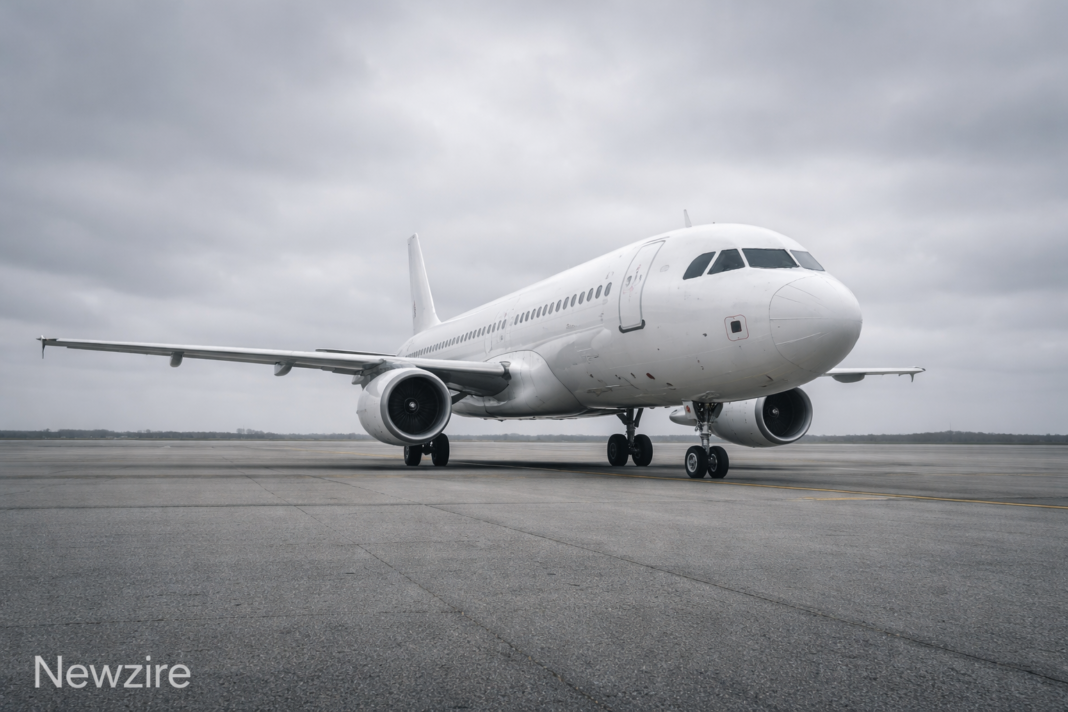
The Latvian carrier that flew millions of passengers for EasyJet and TUI without most of them ever knowing its name is gone. Five months on, investigators across three countries are still trying to establish whether it collapsed or was pushed.
SmartLynx Airlines, a Latvian carrier that quietly operated flights for EasyJet, TUI, Jet2 and others for over three decades, ceased all operations on 24 November 2025. It left behind €240 million in debt, 781 unpaid creditors, crew stranded in Vietnam with no repatriation arranged, and a criminal investigation still running across three countries.
Investigators across Latvia, Ireland and Lithuania have spent the months since trying to answer one question: was this a collapse, or was it engineered to be one.
Table of Contents
The Airline That Was Always Someone Else’s Flight
SmartLynx was not built to be recognised. That was the point.
Founded in 1992 in Riga under the name LatCharter, the carrier spent three decades working as a wet-lease provider, supplying fully crewed, maintained and insured aircraft to other airlines on short-term contracts. The client airline applied their own branding, sold the tickets and handled everything the passenger saw. SmartLynx flew the route.
If you boarded what looked like an EasyJet service on a plain white Airbus with orange livery applied over the top, there was a real chance SmartLynx was operating it. The same was true on certain TUI, Jet2, Condor and Eurowings flights. Passengers had no way of knowing. They were not supposed to.
At its peak in 2024, the group operated close to 70 aircraft and carried 10.66 million passengers, a 62.5% rise on the year before. The Latvian entity alone posted a turnover of €339 million and a profit of €11 million in 2023, according to Latvia’s public business registry.
Those are not the numbers of a business in freefall.
The Debt That Pointed Inward
When SmartLynx Latvia stopped flying, its creditor registry showed €238.4 million owed to 781 parties. The structure of that debt is what drew investigators in.
| Creditor | Amount Owed |
|---|---|
| ASG Finance DAC (Ireland) | €117,156,477 |
| SmartLynx Airlines Malta | €38,830,777 |
| SmartLynx Airlines Estonia | €12,515,456 |
| Smart Aviation Holdings SIA | €2,298,460 |
| Total owed to group entities | ~€174 million |
| External creditors | ~€64 million |
| Latvian state (unpaid taxes) | €522,126 |
Nearly three quarters of the total was owed not to outside suppliers but to companies inside Avia Solutions Group (ASG), the Lithuanian-Irish aviation holding that had owned SmartLynx for years. Among the external creditors owed money were Lufthansa Technik and Joramco.
The Latvian entity’s day-to-day operational debts, covering fuel, airport fees and logistics, were comparatively modest. The massive liabilities sat almost entirely within the corporate group. FlightGlobal reported that analysts described it as the pattern of a company loaded with internal liabilities long before any outsider could see it coming.
33 Days. Six Days. Twenty-Seven Days.
On 19 September 2025, a Dutch entity called Stichting Break Point Distressed Assets Management was registered in Amsterdam. Its nominal director, a Cyprus-based lawyer named Elias Heracleous, controls roughly 70 other companies across Cyprus, according to Blacklist.aero.
Thirty-three days after that company was created, ASG sold SmartLynx Latvia to it.
On 22 October 2025, the sale completed. Break Point took a 90% stake. CEO Edvinas Demenius and CFO Mindaugas Kazakevičius each took 5%. ASG kept the parts of the SmartLynx group it wanted to hold: the Estonian, Maltese, Thai and Australian operations. The debt-laden Latvian entity went to the new owners.
On 28 October 2025, six days after the sale, SmartLynx filed for creditor protection at the Riga District Court.
On 24 November 2025, twenty-seven days after that, it shut down completely.
Blacklist.aero, which published the full creditor list and began coordinating affected parties, said the sequence showed “indicators of intentional bankruptcy and possible fraud.” ASG entities listed as creditors of the Latvian company later declined to pursue court claims when the submission deadline passed.
ASG’s spokeswoman told ch-aviation: “The sale was conducted entirely in accordance with Latvian and EU law. All subsequent decisions have been managed entirely by the new ownership.”
The group has denied any wrongdoing.
The People Who Found Out on Social Media
From January 2025 onwards, SmartLynx crew members were placed on unpaid leave with no explanation from management. Payments slowed through the year. Emails went without reply.
When the airline stopped on 24 November, no formal notice went to staff. Many found out by reading a shared post online.
Crew who were abroad when operations ceased had no repatriation arranged by the company. Several were stranded in Vietnam. They paid their own fares home.
One First Officer publicly stated he was owed around $6,000 in unpaid wages with no clear path to recovering it. SmartLynx had 382 registered employees at the time of shutdown, per Latvia’s Register of Enterprises. A large number of crew had been engaged through external staffing agencies rather than employed directly, which under Latvian law left them with limited formal protection.
The airline’s marketing chief stated publicly that the company owed nothing to agency-employed staff. Latvian Aviation Trade Union head Dace Kavasa confirmed that legally, that position was hard to argue against.
Nigeria’s Air Peace: $15 Million Lost Without Warning
The crew were not the only ones given no notice.
Nigerian carrier Air Peace had been operating at least four SmartLynx Airbus A320s on its domestic network while 13 of its own aircraft were abroad in scheduled maintenance. Between 11 and 16 November 2025, SmartLynx pulled the planes back without any prior communication.
Speaking to reporters in Lagos on 14 November, Air Peace’s Chief Commercial Officer Nowel Ngala said: “We consider this action by SmartLynx to be a serious breach of contract, fraudulent, and a premeditated scheme. This withdrawal was done without prior notice, a clear violation of industry standards and of the agreement between both parties.”
Ch-aviation reported that SmartLynx had accepted upfront payments from Air Peace while already in default to the aircraft’s true owners, who then repossessed the planes. Air Peace says total losses came to more than $15 million, with over $5 million of its own money still sitting with SmartLynx when the airline stopped flying.
A Criminal Investigation Across Three Countries
Latvia’s Economic Crimes Investigation Unit opened a formal investigation into the collapse, focused on suspected fraud and what officers are treating as a potentially fictitious sale. At least one creditor filed a police complaint to trigger it.
Because the corporate structure spread across Latvia, Ireland, the Netherlands and Cyprus, Latvian investigators are working with counterparts in Ireland and Lithuania, according to Aviation.Direct.
The individual said to be at the centre of the inquiry reportedly left the country. Blacklist.aero reported that CEO Demenius departed for an extended stay abroad after investigators expressed interest in him. No charges have been publicly filed.
The question at the heart of the case has three parts. How did ASG Finance DAC, an Ireland-registered group entity, come to hold €117 million of the Latvian unit’s debt? Were the internal charges that built that liability artificially inflated? And was the transfer to a newly registered Dutch fund arranged specifically to move those liabilities away from the wider group before the creditor protection filing that came six days after the sale?
Latvia’s Economic Crimes Unit is working with counterparts across four legal systems to establish what happened inside those inter-company accounts. The core issue is whether the transfer was structured to place the liabilities beyond reach before the insolvency process began.
Under EU rules on fraudulent conveyance, a transaction can be challenged if it was arranged to the detriment of creditors. Whether that route leads anywhere across this many jurisdictions is what the case now has to answer.
The Collapse Kept Going
The day after SmartLynx Latvia ceased operations, ASG disclosed in its third-quarter financial report that it had also sold SmartLynx Estonia and SmartLynx Malta to the same Dutch fund. The group told FlightGlobal: “Due to operational synergies, the Maltese and Estonian operations were subsequently sold to the same group, enabling unified oversight across the three entities.”
By 5 December, the Estonian business register recorded the transfer. On 18 December 2025, Estonian aviation authorities revoked SmartLynx Estonia’s Air Operator Certificate. Bankruptcy proceedings for that entity were opened by the Tallinn District Court shortly after.
SmartLynx Malta’s company secretary resigned on 28 November. Its certificate status was not publicly confirmed.
In January 2026, another ASG subsidiary, the Slovak ACMI carrier AirExplore, was folded into Lithuanian operator KlasJet. Its founder and CEO of 16 years, Martin Stulajter, resigned on the same day staff were told.
When Blacklist.aero first published the full SmartLynx creditor list, ASG’s bonds, a $300 million issuance from 2023, fell from 95 cents to 77 cents on secondary markets, dropping below the threshold at which investors typically treat debt as effectively in default.
SmartLynx was the fifth airline to fold in European aviation in roughly 90 days, after PLAY, Braathens International Airways, Eastern Airways and Blue Islands.
Five Months On
The investigation is still open. The creditors are still waiting.
781 parties are owed money. Hundreds of workers, many without direct employment contracts, have limited legal routes to recover unpaid wages. A Nigerian carrier lost $15 million. And the group that built the internal debt structure now at the centre of a cross-border criminal inquiry is still operating 11 active Air Operator Certificates and a fleet of 187 aircraft worldwide.
The ASG-linked companies listed in SmartLynx Latvia’s creditor registry, collectively owed approximately €174 million, did not submit court claims when the insolvency deadline passed. Blacklist.aero confirmed the deadline has expired. Without a filed claim, those entities hold no formal standing in any distribution of recovered assets.
What prosecutors across three countries establish from here will say a great deal about whether European insolvency law can keep pace with corporate structures assembled across four jurisdictions in a matter of weeks.
For the crew member who paid their own fare home from Vietnam, that answer cannot come quickly enough.
Sources: LSM — Latvian Public Broadcasting | FlightGlobal | ch-aviation | FlightRadar24 | Blacklist.aero | The Engine Cowl