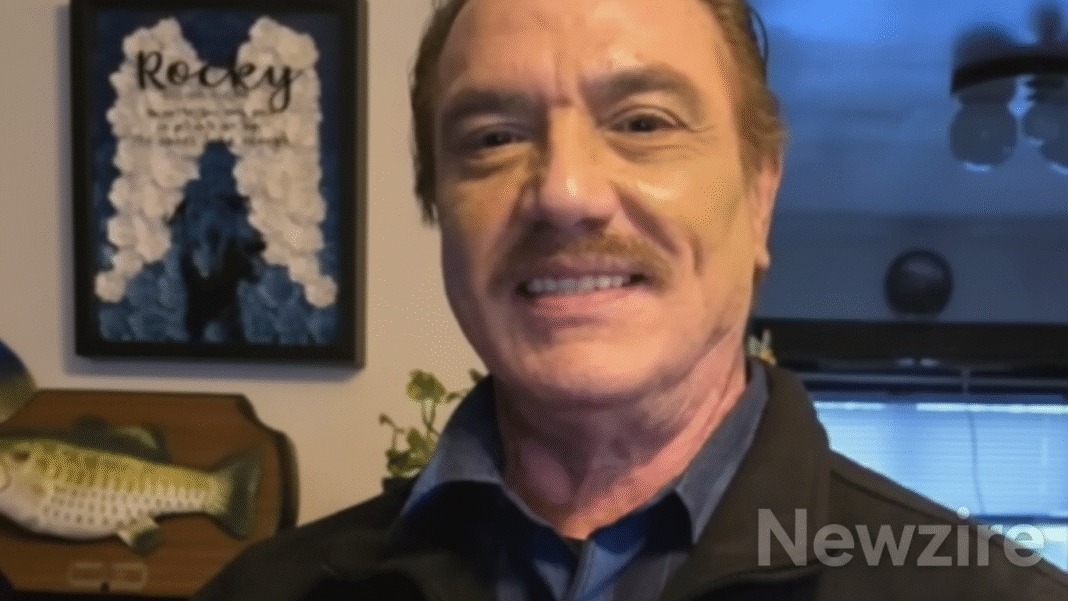
UPDATE (20 January 2026): Victor Avila was released from ICE custody after the government declined to appeal the immigration judge’s December ruling. He returned home to San Diego after nearly nine months in detention. The government did not file an appeal by the 13 January 2026 deadline, allowing the judge’s favorable decision to take effect.
Immigration officials detained a 66-year-old legal assistant at San Francisco International Airport on 7 May 2025 upon returning from Japan, where he visited his son stationed with the US Air Force. Victor Avila was held in federal custody for more than eight months despite holding a green card since 1967.
Officers detained Avila during routine screening. His wife, a US citizen, passed through customs. He did not. An immigration judge ruled in December 2025 that he could remain in the United States. The government initially reserved the right to challenge this decision.
Table of Contents
58 Years in America as Legal Resident
Avila immigrated from Mexico as a teenager in 1967. He has worked for over a decade as a legal assistant at San Diego workers’ compensation law firm Kiwan & Chambers APC, helping injured workers access their benefits.
His wife, four children, and six grandchildren all hold US citizenship. One son serves in the US Air Force.
Authorities cited a 2009 DUI conviction and drug possession charge. Both were misdemeanours. Avila served his sentence and paid all fines 16 years ago.
Officials renewed his green card twice after the 2009 convictions, approving his continued legal residency despite the criminal record.
The Conflicting Criminal Record Claims
Avila’s daughter Carina Mejia told local news her father faced two misdemeanour charges in 2009. “Served all his time, paid all he had to pay,” she said in an interview with ABC 10 News San Diego. “Since then, he’s been a good man, a hard worker. Hasn’t gotten into trouble, not one time.”
US Customs and Border Protection disputes this account. A CBP spokesperson told Newsweek in June 2025 that Avila has “six separate arrests” for driving under the influence, drug possession and petty theft.
The family disputes the six-arrest claim. News outlets including ABC 10 News and Newsweek reported the 2009 convictions. Public records reviewed by reporters confirmed those two misdemeanour convictions but did not show documentation of additional arrests. CBP has not released arrest records or court documents supporting the higher figure.
The agency added: “Possessing a green card is a privilege, not a right. Under our nation’s laws, our government has the authority to revoke a green card if our laws are broken and abused.”
How Green Card Holders Can Lose Their Status
Green card holders can face deportation for certain criminal convictions, even decades after completing their sentences. The US Citizenship and Immigration Services states that lawful permanent residents lose their status if an immigration judge issues a final removal order.
Crimes that can trigger deportation proceedings include:
- Drug-related offences, including possession
- Crimes involving moral turpitude, which covers theft, fraud and certain assault convictions
- Aggravated felonies as defined by immigration law
The National Immigration Law Center, a leading immigration rights organization, warns that federal law has a very broad definition of conviction. Old cases that do not count as offenses in criminal court can still count as convictions in immigration court. A case where the plea was withdrawn after completing a drug treatment programme could still qualify for immigration purposes.
The organization issued guidance in September 2025 warning green card holders about heightened deportation risks under expanded enforcement policies, noting that even those returning from international travel can be detained at airports for past convictions.
Green card renewals do not guarantee protection from future deportation proceedings. Immigration authorities can initiate removal proceedings based on such offenses regardless of how many times it was successfully renewed.
2025 Enforcement Expansion Targets Long-Term Residents
Immigration enforcement intensified significantly in 2025. ICE detention populations grew from 39,000 people in January to over 61,000 by August, reaching the highest levels since the agency’s creation, according to federal data reported by multiple news outlets.
NPR reported in December 2025 that the Trump administration has transformed US Citizenship and Immigration Services into an enforcement agency, with officials stating it “must be an immigration enforcement agency” at its core. The changes include hiring thousands of new officers and expanding detention of immigrants with valid documentation.
From Airport Cell to Bakersfield Detention Centre
Officers initially held Avila inside San Francisco airport for several weeks. His daughter said he slept on chairs in a detention room.
Authorities then transferred him to Mesa Verde ICE Processing Centre, a facility outside Bakersfield approximately 300 miles from his San Diego home, which houses immigrants awaiting deportation hearings or removal.
Courts initially scheduled a hearing for 15 July 2025, later rescheduled to 1 August. The case proceeded to a full trial on 15 October 2025, which required continuation to 8 December due to the volume of testimony.
Immigration Judge Rules in His Favour
After three days of testimony and evidence spread across October and December 2025, the immigration judge granted Avila relief from the deportation order. The judge found sufficient grounds to allow him to remain in the United States as a legal permanent resident.
What the judge considered:
- 58 years of continuous legal residency
- Employment history spanning over 40 years
- Strong family ties: four US citizen children and six US citizen grandchildren
- SSI and Medicare eligibility after paying into both systems for decades
- Completion of his criminal sentence with no subsequent arrests
- His role helping his family whilst in the United States
The judge’s favorable ruling allowed Avila to keep his green card status and remain in the United States permanently. Judges can grant relief from deportation when immigrants demonstrate exceptional circumstances, substantial rehabilitation and strong ties to America.
Officials immediately reserved the right to challenge the ruling. This reservation automatically stayed the judge’s release order, which meant the order was temporarily suspended whilst they decided whether to contest it. Avila remained in custody during this period.
Government Had Until 13 January to Challenge Ruling
ICE had until 13 January 2026 to file a formal challenge to the judge’s decision. If the agency did not contest by that deadline, the judge’s order would take effect and Avila would be released.
Typical grounds for government appeals include:
- Legal errors in applying immigration law
- Improper weighing of relevant factors
- Failure to meet legal requirements for relief
Officials did not publicly disclose whether they planned to challenge Avila’s case. Immigration courts do not publish statistics on how often such challenges are filed or succeed.
His legal team explored options for release whilst this window remained open. His employer organised a GoFundMe campaign that raised over $29,000 for legal fees and family support.
The campaign stated: “Despite being a legal resident for almost sixty years and only charged with a misdemeanor possession charge on his record, ICE has decided to institute deportation proceedings against Victor and refuse to release him.”
Government Declines to Challenge: Avila Released
The government did not file an appeal by the 13 January 2026 deadline. With no challenge filed, the immigration judge’s December ruling took full effect, ordering Avila’s immediate release from custody.
ICE held Avila in detention until the final day of the deadline period. On approximately 13 January 2026, authorities released him in Fresno, California, approximately two hours north of the Bakersfield facility where he had been held. This required his wife and daughter to drive the additional distance to collect him.
According to the GoFundMe update posted 20 January 2026, “Victor is currently at home in San Diego recovering from this nearly nine month ordeal. Needless to say his family, friends and coworkers are elated that Victor is back home in San Diego.”
Avila has returned to work as a legal assistant at Kiwan & Chambers APC.
The legal team now plans to pursue US citizenship for Avila to provide permanent protection from future immigration enforcement actions. The GoFundMe campaign continues to accept donations to fund the naturalization process.
Part of Wider 2025 Enforcement Pattern
Avila’s case reflects a broader 2025 enforcement shift targeting long-term legal residents with decades-old criminal records.
Pang Bailey, a Hmong refugee who lived in America for 47 years, was deported to Laos in August 2025 over a bank fraud conviction from 2000. She attended her routine annual check-in with immigration officials and was detained on the spot, then placed on a military cargo plane to Vientiane.
Claudio Cortez-Herrera, a Michigan resident who held a green card for over 20 years, was surrounded by ten agents at a post office in April 2025. He was deported to Mexico in October over a conviction from his teenage years, leaving behind his two US citizen children, including a five-year-old son with autism.
These cases reflect the broader enforcement shift documented by immigration attorneys and legal organizations. Long-term legal residents now face removal proceedings for convictions that occurred years or decades ago, despite having no recent arrests.
Avila Home After Nine Months
Mejia visited her father regularly during his detention at the Bakersfield facility. She told reporters during the ordeal that he experienced both hopeful days and difficult days whilst awaiting the government’s decision.
“There are days he’s hopeful, optimistic,” she said. “Then there’s days he mentally prepares himself for the worst. I want my dad back. I want my dad home.”
The family’s wait ended on 13 January 2026 when the government allowed the deadline to pass without filing a challenge. After nearly nine months in federal custody, Avila returned to his home in San Diego.
According to his legal team and family, Avila is now focused on obtaining US citizenship to prevent future detention. The naturalization process typically takes several months to over a year to complete.